
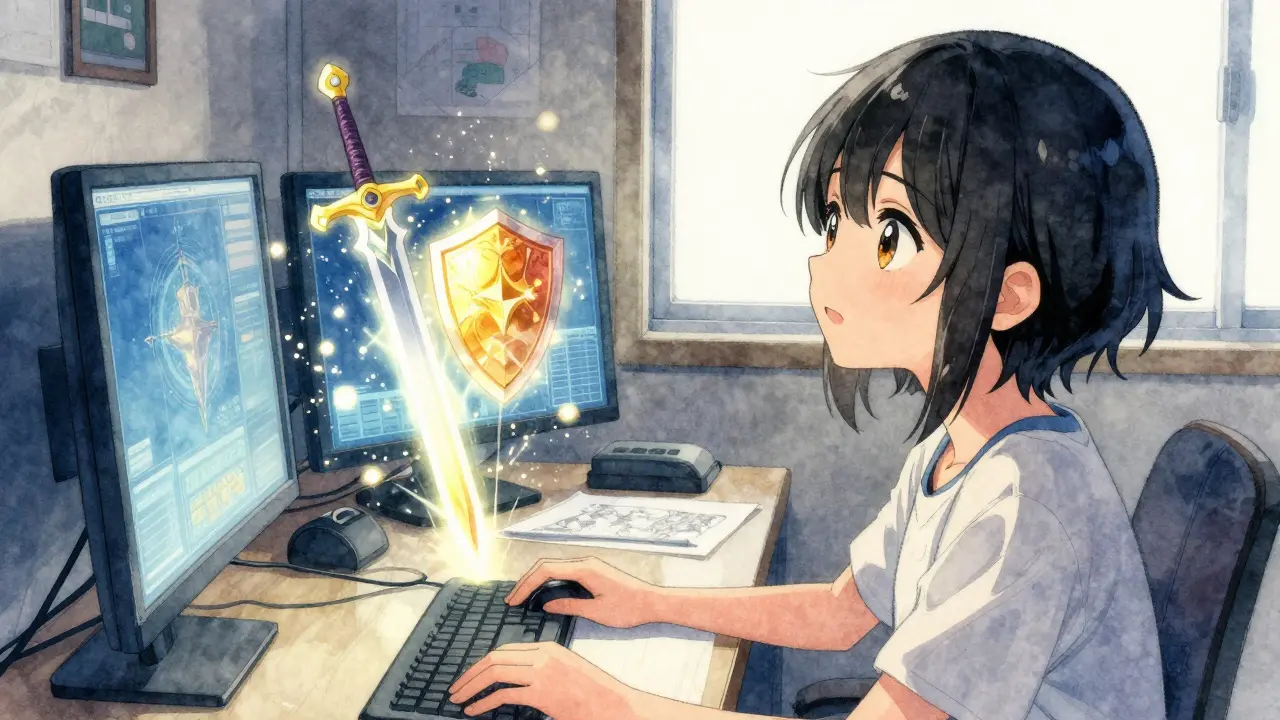
In 2021, everyone was shouting about digital ownership, but the promise often failed to deliver. Fast forward to early 2026, and the noise has settled into something real. As a game developer, you are likely wondering if Non-Fungible Tokens (NFTs) are still worth the time or just another passing trend. The short answer is they have become a necessary tool for sustainable studio growth, provided you understand how to use them beyond simple speculation.
We are past the stage of trading JPEG monkeys for millions. We are now at a point where digital assets function like any other inventory in your economy, except players truly own them. This shift changes how you design your roadmap, manage your cash flow, and engage with your community. If you are building a studio today, ignoring this technology means leaving money and loyalty on the table.
Quick Summary / Key Takeaways
- NFTs provide ongoing royalty income from secondary market sales, creating revenue beyond launch day.
- Interoperable assets allow players to carry items across different games, boosting retention.
- The shift from play-to-earn to play-to-own models increases emotional investment in your ecosystem.
- Smart contracts automate payments, reducing administrative overhead for transactions.
- Web3 communities operate through DAOs, giving players a direct voice in future development.
Why Game Developers Need to Pay Attention Now
The gaming landscape has shifted significantly over the last five years. When NFTs digital tokens representing unique ownership of assets on a blockchain first appeared, many studios dismissed them as gambling mechanisms. That perception is outdated. By 2026, these tokens serve as the backend infrastructure for verified ownership.
You might ask yourself why traditional servers aren't enough. In a centralized database, you technically own the server, and you can delete a player's account instantly. With blockchain technology, ownership is distributed. This forces a change in mindset. Instead of renting an experience to a user, you are issuing a deed to a part of that world. This creates a legal and technical distinction that impacts how you value your IP long-term.
Furthermore, investors looking for stable returns are increasingly scrutinizing studios that offer tangible asset backing. An inventory backed by verified tokens holds value differently than an inventory managed purely in SQL tables. It adds a layer of liquidity to the company itself. For indie developers in Wellington or Silicon Valley, this means your project can attract funding types that were previously off-limits to creative industries.
Sustainable Revenue Through Royalties
One of the biggest headaches for developers is the drop-off in revenue after launch. Once players buy the base game, your income relies entirely on new user acquisition or optional microtransactions that often frustrate paying users. Secondary Markets platforms where users buy and sell digital assets without developer intervention solve this by keeping the developer in the loop.
When you mint an in-game sword or skin as an NFT, you program a royalty fee into its DNA. Every time a player sells that item to another player, a percentage automatically flows back to your wallet. This isn't theoretical anymore; many live titles rely on this passive income stream to fund seasonal updates.
- Initial sale funds immediate development costs.
- Resale royalties fund long-term maintenance and server costs.
- Scarcity is preserved because the total supply is visible on-chain.
- No middlemen take a massive cut, unlike some app store platforms.
Imagine launching a beta season where you sell ten limited edition avatar frames. Even if those original buyers never return to the game, their resale activity generates revenue that pays for your next expansion pack. This decouples your earnings from daily active users alone. You get paid when the community trades, which is often higher frequency than new sign-ups.
Cross-Game Asset Utility
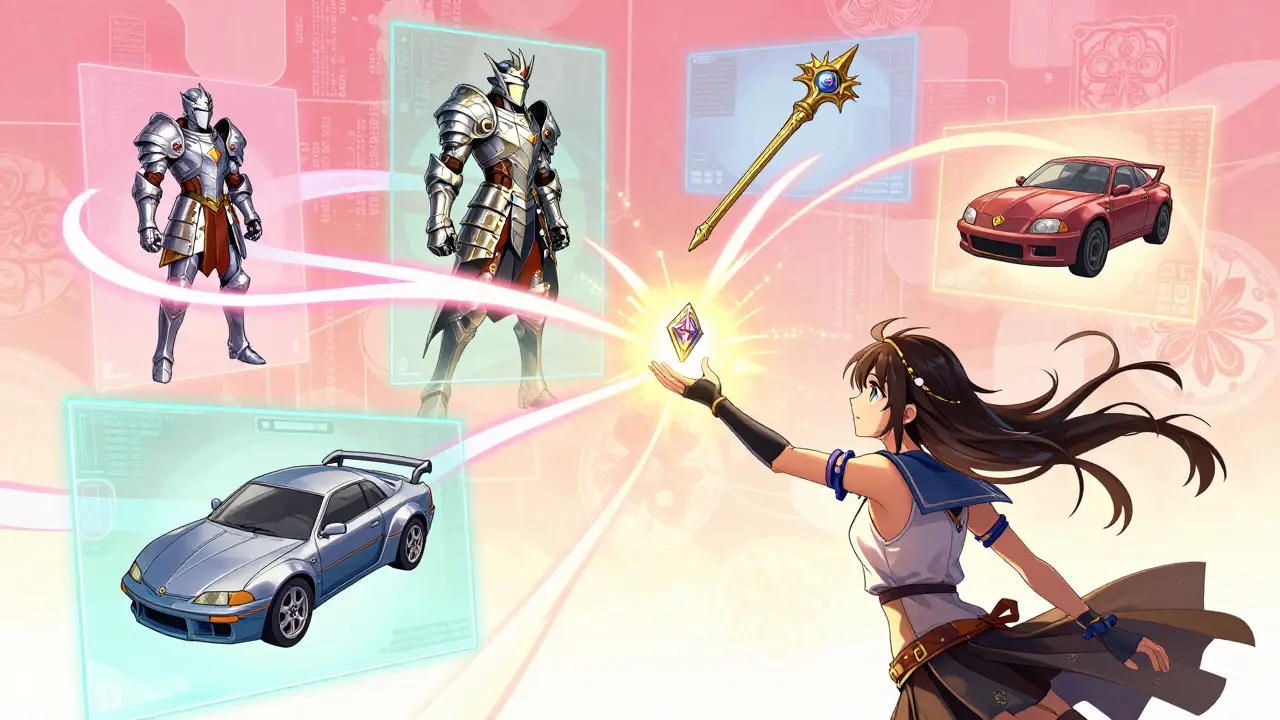
The most compelling argument for adoption is interoperability. Historically, if a gamer bought a helmet in one franchise, that helmet died with the franchise. Interoperability the ability for assets to move freely between different software environments breaks that cycle.
Players now expect their investments to travel. If a character's armor works in multiple open worlds within a shared universe, the incentive to try new titles grows. You don't have to reinvent the wheel for every project. You can leverage existing assets to reduce load times and increase immersion.
This capability also opens doors for cross-promotion. You can partner with other developers who use similar standards. If you develop RPG elements and they develop simulation elements, your assets complement theirs. A player bringing a custom car from your racing title into their flight sim creates organic marketing. You share customer acquisition costs while doubling lifetime value.
True Ownership and Player Psychology
There is a distinct psychological shift happening in the industry, moving away from the "play-to-earn" narrative toward "play-to-own." Players in 2026 care less about making quick crypto bucks and more about curating a digital legacy. They want their achievements to hold weight outside the closed server environment.
Ownership drives behavior. When a user knows an item belongs to them permanently, they protect it, upgrade it, and showcase it. This mirrors physical hobbies like stamp collecting or vintage gaming console restoration. By validating this sentiment through tokenization, you align your business goals with player desires.
Reduced churn follows naturally. A player willing to sell an asset at a loss to recoup funds is more invested than one who simply clicks out because the subscription price rose. You create a relationship based on shared equity rather than service provision. This stability is crucial for planning multi-year roadmaps without fearing sudden user abandonment.

Implementing Smart Contracts Safely
Tech teams worry about complexity, and rightly so. Integrating Smart Contracts self-executing contracts with terms directly written into code introduces a new skillset. However, the barrier has lowered significantly since 2024. SDKs now exist specifically for Unity and Unreal Engine that handle the heavy lifting.
You need to prioritize security above all else. Auditing code before deployment is non-negotiable. A vulnerability in your contract could drain the treasury or compromise user wallets. The cost of an audit is minor compared to the risk of a hack. Think of it like firewall configuration for your web servers, essential rather than optional.
User experience also matters. Nobody wants to swap seeds for private keys manually every time they log in. Modern solutions use non-custodial wallet abstraction, meaning the user feels like they are logging in normally while the system handles the blockchain interactions invisibly. Your job is to ensure the friction is low enough that a casual player doesn't even realize blockchain is involved.
| Feature | Traditional Model | Blockchain Model |
|---|---|---|
| Asset Ownership | Licensed from Developer | Owned by Player |
| Resale Rights | Usually Prohibited | Enabled via Secondary Markets |
| Revenue Stream | Direct Purchase Only | Direct + Royalty Fees |
| Data Transparency | Opaque Server Logs | Public Ledger |
| Governance | Centralized Corporate Decisions | DAO Voting Mechanisms |
Building Community with DAOs
Beyond economics, governance structures change too. Decentralized Autonomous Organizations, or DAOs organizations represented by rules encoded as computer programs running on blockchain, allow your loyal fanbase to vote on features.
Instead of relying solely on focus groups or beta testers, token holders can propose and vote on budget allocation for art direction or new maps. This reduces the risk of launching unpopular content. If the community owns the platform, they defend the brand. They become evangelists who recruit others, knowing their stake is tied to the network's success.
However, balance is required. You cannot give up total creative control. Most successful projects use a hybrid model where the developer retains veto power or manages strategic direction, while the community controls tactical improvements like event frequency or cosmetic shop availability.
Looking Ahead to Late 2026
As we approach the end of this year, the focus is shifting heavily toward regulation. While the US and EU are tightening compliance rules, New Zealand has been relatively adaptive regarding crypto-assets. Staying compliant means documenting your AML processes clearly. The goal is safety, which protects your reputation.
The Metaverse connection remains a strong narrative. Games are becoming social hubs where work, entertainment, and commerce blend. Owning a piece of land or identity there is valuable. Developers who prepare for this transition now will find themselves well-positioned when the broader internet shifts deeper into spatial computing.
Your strategy should be pragmatic. Do not build an entire economy around volatile coins. Use stablecoins for settlement to minimize inflation risks for your players. Focus on utility: does the token grant access? Does it represent a tool? If the answer is yes, the volatility matters less.
Are NFTs still relevant for indie developers?
Yes, especially for funding initial production costs. Selling limited genesis editions allows indie devs to raise capital without relinquishing equity to VCs. The secondary market royalties provide a cushion against financial instability common in early-stage games.
Do players actually want true ownership?
Market data from 2025 indicates a split preference. Hardcore collectors value portability and resale rights highly. Casual gamers prefer simplicity. The solution is offering seamless login experiences where ownership is a background feature, not a forced burden.
What are the biggest risks to watch out for?
Regulatory changes and smart contract bugs are the top two. Ensuring your legal team reviews your tokenomics regularly prevents compliance issues. Code audits are mandatory to prevent hacks. Security breaches destroy trust faster than poor gameplay mechanics.
Can I integrate NFTs into existing PC games?
Retro-fitting is possible but complex. You usually issue the digital asset upon purchase of the physical copy via a secure key exchange. Direct retrofits require updating the engine to accept wallet connections. Testing is extensive to ensure no performance lag occurs.
How does this impact taxation for my studio?
Digital asset sales are taxable events in most jurisdictions. You need to track the fair market value of royalties received. Keeping clear records of transaction timestamps helps satisfy tax authorities during audits. Consult local experts in Wellington or your region.
Tiffany Selchow
March 31, 2026 AT 05:48The whole thing is just a scam waiting to happen.
Justin Garcia
April 1, 2026 AT 07:39Stop pretending you care about players when you really just want fees.
You know exactly what this does to wallets.
Matt Bridger
April 3, 2026 AT 04:45It is quite amusing that everyone jumps on the latest bandwagon without reading the whitepapers thoroughly.
There is a distinct lack of fundamental understanding regarding tokenomics in this sector.
Most studios fail to appreciate the nuance required for sustainable economic models.
Alex Lo
April 3, 2026 AT 15:07I totally get what ur saying mate but sometimes people just dont listen cause its hard stuff.
We gotta remember that tech moves fast these days and nobody really knows everything yet so we should give it time.
Maybe the devs trying this out are actually doing good things for gamers longterm even if it looks messy now.
I mean i saw some games where u could trade swords and that felt kinda cool to me honestly.
So maybe we shoudnt be so harsh on the new ideas until we see what breaks.
The blockchain part seems tricky but the SDKs are getting better every single week right?
People complain a lot but i feel like the future is already happening around us slowly.
We all want our game stuff to be worth something real outside the server files.
Ownership feels different when u can sell it for cash or crypto later on.
I hope more indie teams try this because big co might be scared to move fast enough.
Its okay to be worried but dont let fear stop innovation in our hobby industry completely.
Just my two cents on why i think its still worth watching closely year after year.
Also security audits are super important and cant stress that part enough for anyone building stuff.
Anyway just wanted to say keep talking about this topic bc it matters for our wallets too.
Cool thread here guys thanks for reading my ramble basically lol.
Beverly Menezes
April 4, 2026 AT 23:30I think we should focus on how this helps small creators survive.
Traditional funding is tough so selling assets makes sense for survival.
Alex Kuzmenko
April 6, 2026 AT 07:24Yeap agree with that view.
Small teams need that extra cushion to finish dev cycles properly.
Ronald Siggy
April 7, 2026 AT 04:34This technology empowers independent voices to take control of their IP.
Studios should embrace the tools that foster creativity without heavy gatekeeping.
Raymond K
April 8, 2026 AT 19:14I knoowww it can be trcky but i believe in the vison!
Every little step forward builds a brighter path for us all in the end!
Just need patience and trust the process moving ahead slowly!
Liam Robertson
April 9, 2026 AT 03:06Looks promising if they fix the gas fees issue soon.
Otherwise casual players will just walk away from the concept entirely.
Jamie Riddell
April 9, 2026 AT 22:56Absolutely agree
cost matters more than feature sets now
joshua kutcher
April 11, 2026 AT 13:43We have to consider the community feedback before rolling anything out widely.
Listening to player concerns helps prevent bad experiences later down the line.
athalia georgina
April 12, 2026 AT 16:46sometimes i think devs listen too much to n00bs tho.
what do they know about code anyway??
just need to ship the product faster than the haters talk back
Shaira Vargas
April 13, 2026 AT 14:10It is absolutely heartbreaking to see trust broken over these fake promises constantly.
Why do I feel ignored again when they change the rules mid-season?
Leah Lara
April 13, 2026 AT 18:14Meh nothing changes much.
Katrina Tate
April 14, 2026 AT 05:02Nothing changes because the system is designed to extract value not share it equally.
Always been that way.
Addy Stearns
April 16, 2026 AT 04:07People always forget the core philosophy behind digital scarcity.
It is not really about making money quickly with tokens.
We need to see how value transfers between different ecosystems.
A token represents proof of work done by the creator originally.
This changes how we think about legacy in virtual spaces forever.
Many developers ignore the long term implications of custody.
Ownership creates a relationship of stewardship rather than consumption.
When players feel they truly hold something, behavior changes drastically.
They protect their assets as they would physical property items.
This psychological shift is far more important than immediate revenue.
Communities built on shared ownership tend to last much longer.
Trust becomes the currency instead of engagement metrics alone.
We must consider the ethics of gating access behind tokens too.
Everyone deserves entry regardless of wealth eventually in theory.
Balancing exclusivity with inclusivity remains the hardest task facing us.
Elizabeth Akers
April 17, 2026 AT 22:14that is such a nice way to look at it
hope we find balance soon
Ashley Stump
April 18, 2026 AT 20:47The regulators will never stop this underground movement though.
Big banks want to control every transaction flow.
Sean Carr
April 20, 2026 AT 08:59Compliance is actually the best shield against scams and fraud.
Working within the law protects your studio from massive liability.