

Ever bought a ticket to a massive show only to find out it was a fake, or watched as a bot snatched up every seat in seconds just to resell them at 10x the price? It's a nightmare for fans and a headache for event organizers. For decades, we've relied on barcodes and PDFs that are incredibly easy to copy or forge. But the game is changing. By using blockchain ticketing is a system that uses distributed ledger technology to turn event tickets into unique, verifiable digital assets. Instead of a piece of paper or a QR code that anyone can screenshot, your ticket becomes an NFT (Non-Fungible Token). This means your entry pass is now a secure digital collectible that can't be duplicated, providing a level of security that traditional systems simply can't touch.
Killing the Fake Ticket Market
The biggest win here is the end of the "fake ticket" scam. In the old way of doing things, a fraudster could sell the same PDF ticket to ten different people. Only one person gets in; the other nine are left standing in the rain. Because each NFT ticket is recorded on a blockchain, it has a unique digital fingerprint. This makes it virtually impossible to forge.
When you scan an NFT ticket at the gate, the system isn't just checking if a code exists; it's verifying ownership on the ledger in real-time. If a ticket has been transferred or flagged, the organizer knows instantly. This shift moves the trust from a third-party vendor to the math and encryption of the blockchain itself, which doesn't make mistakes or take bribes.
Taking Back Control from Scalpers
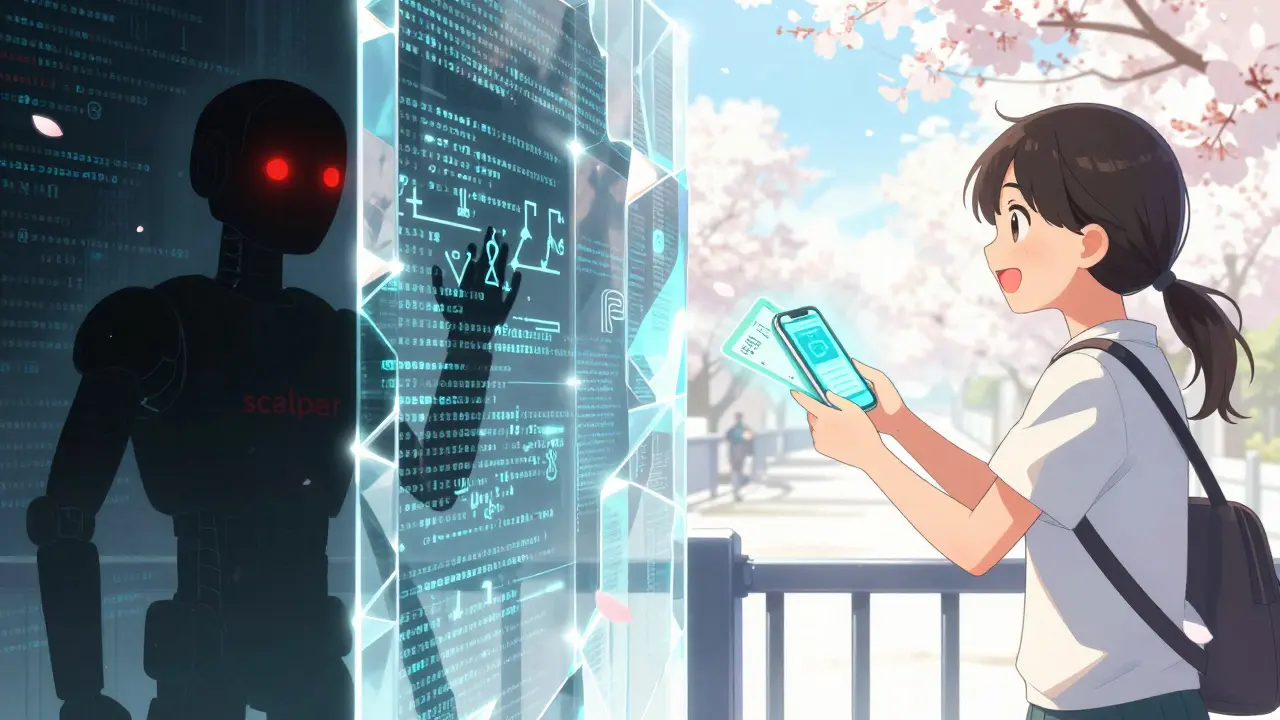
We've all seen those resale sites where a $100 ticket suddenly costs $2,000. Organizers usually have zero control over this once the ticket leaves their site. Enter Smart Contracts. These are self-executing contracts with the terms of the agreement directly written into lines of code. By embedding a smart contract into a ticket, an organizer can set hard rules for the ticket's entire life.
Want to stop price gouging? You can program a maximum resale price. For example, a festival could dictate that a ticket cannot be resold for more than 110% of its original value. You can even set it so that a percentage of every secondary sale goes back to the artist or the venue as a royalty. This flips the script: instead of scalpers making all the profit, the people who actually created the event get a cut of the hype.
| Feature | Traditional Tickets (PDF/Paper) | NFT Blockchain Tickets |
|---|---|---|
| Authenticity | Easy to forge or duplicate | Immutable and unique digital ID |
| Resale Control | None (Wild West market) | Programmable via Smart Contracts |
| Revenue Stream | One-time sale | Ongoing royalties from resales |
| Data Access | Lose track after first sale | Direct connection to current owner |
| Entry Process | Manual ID or QR scan | Instant ledger verification/Facial ID |
Turning a Ticket into a Membership
A traditional ticket is useless the moment the concert ends. It's a piece of trash. An NFT ticket, however, is a digital asset that you keep in your Crypto Wallet. This transforms the attendee's experience from a one-night event into a long-term relationship. Organizers can use these tickets to reward loyalty.
Imagine if owning a ticket to a 2025 tour automatically granted you early access to 2026 pre-sales, or unlocked a hidden lounge at the venue. Because the organizer can see who actually holds the NFT, they can push personalized perks directly to the user. Some events are even integrating these tickets with merchandise purchases-your ticket could be the "key" that unlocks a limited-edition t-shirt available only to those who attended the show.

The Practical Side: How it Actually Works
For the average fan, the process is becoming as simple as using any other app. You don't need to be a blockchain expert to benefit from this. Usually, the process follows these steps:
- Purchase: You buy the ticket through a platform. The system creates an NFT and assigns it to your account or wallet.
- Storage: The ticket lives in a digital wallet. No more digging through old emails to find a confirmation PDF.
- Transfer: If you can't make it, you sell or send the ticket via the blockchain. The smart contract ensures the price stays fair and the original organizer gets their royalty.
- Entry: At the venue, a quick scan of the wallet (or a facial recognition check linked to the NFT) lets you in.
While there is a learning curve for people who have never used a digital wallet, many platforms are now "abstracting" the blockchain, meaning the user sees a normal login screen while the blockchain does all the heavy lifting in the background.
Potential Hurdles and Reality Checks
It's not all sunshine and rainbows. The biggest challenge is adoption. For this to work perfectly, both the organizer and the attendee need to be on board. If a fan is terrified of the word "crypto," they might hesitate to use an NFT-based system. There is also the issue of gas fees-the cost of processing a transaction on the network. However, the move toward "Layer 2" solutions has slashed these costs, making them negligible for a ticket purchase.
Another concern is the environmental impact of certain blockchains. Most modern ticketing platforms are now using "Proof of Stake" networks, which use a fraction of the energy compared to the old mining systems, making the process sustainable for large-scale events.
Do I need to own cryptocurrency to use NFT tickets?
Not necessarily. Many modern ticketing platforms allow you to buy NFT tickets using a credit card or Apple Pay. They create a "custodial wallet" for you in the background, so you get the security of the blockchain without needing to manage private keys or buy Ethereum.
Can someone still steal my NFT ticket?
It's much harder to "fake" a ticket, but if someone gets access to your private wallet keys, they could potentially transfer the NFT. This is why using secure wallets and two-factor authentication is critical, just as it is with your banking apps.
How does this actually stop bots?
Organizers can implement "Proof of Personhood" requirements. By linking the NFT ticket to a verified identity or requiring a specific wallet history, they can make it incredibly difficult for a single bot to create a thousand accounts and hoard tickets.
What happens if I lose my phone?
Since the ticket is stored on the blockchain and linked to your account/wallet, it's not "on" your phone in the traditional sense. You simply log back into your wallet or platform on a new device, and your ticket is right there, waiting for you.
Will this make tickets more expensive?
Actually, it can make them cheaper for fans. By removing third-party ticketing middlemen and stopping scalpers from inflating prices, the cost of the ticket stays closer to what the artist actually wants to charge.
Robert Smith
April 30, 2026 AT 15:04Finally! 🎟️🔥
Felix Eduardo Velasquez
May 1, 2026 AT 02:02The real challenge here is the centralized nature of most 'NFT' tickets. Most companies use a private ledger and just call it an NFT to ride the hype. True decentralization would allow for a peer-to-peer marketplace without the venue taking a cut, but that defeats the purpose of the royalties mentioned in the post. We need to distinguish between a tokenized database and a public blockchain if we want to talk about actual systemic change.
Emily A
May 2, 2026 AT 13:25It is quite naive to assume that bots cannot adapt to these systems. Historically, every single security measure implemented by ticketing agencies has been circumvented by developers within weeks. The notion that a 'Proof of Personhood' requirement will permanently stop scalpers is a fallacy; people will simply farm verified identities or pay others to create accounts for them.
Rushell Perry
May 3, 2026 AT 04:40this sounds like a great way to help fans actually get tickets at fair prices without the stress
Lloyd I
May 3, 2026 AT 09:51Love the energy here! This is exactly the kind of innovation we need to make live events accessible to everyone again. Let's push for more artists to adopt this!
debra hoskins
May 5, 2026 AT 06:25The utopian vision of a frictionless ticket market is a complete fantasy. We are just swapping one set of middlemen for a different, more opaque set of tech overlords. It's a digital sleight of hand that dresses up corporate greed as a revolutionary breakthrough.
Sri Astuti
May 5, 2026 AT 09:35Honestly the sheer audacity of thinking that a few lines of code on a blockchain can solve the deep-rooted greed of the ticketing industry is just laughable 🙄 I've seen a dozen 'revolutionary' technologies come and go, and each time the ticket prices just climb higher while the fans get more squeezed into these digital ecosystems that only benefit the platform owners. It's just another layer of abstraction to make us feel like we have control while the house always wins in the end 🙄
Harvey Alford
May 6, 2026 AT 15:53My wallet was hacked last year. Good luck.
its me
May 8, 2026 AT 11:56It's interesting how we prioritize the 'efficiency' of a transaction over the actual human experience of discovery. We've reached a point where the medium is more important than the message, and by automating the 'fairness' of a ticket, we're actually stripping away the last remnants of organic community interaction in favor of a sterile, algorithmic distribution system.
VIVEK SINGH
May 9, 2026 AT 18:16Oh sure, because the 'math and encryption' of a blockchain is’t famously known for having catastrophic bugs and exploits. I can't wait for the day someone hacks the smart contract and suddenly 50,000 people have the same NFT ticket to a 20,000 seat venue. That'll be a real party. Pure genius.
Andrew Todd
May 11, 2026 AT 03:07This is garbage. Only idiots believe this stuff works. We do it better in the US anyway.
Elle Kharitou
May 11, 2026 AT 03:49I find it so beautiful that we can turn a fleeting moment-a concert, a dance, a song-into a lasting digital memento that evolves with us 🌟 Imagine the legacy of owning a ticket from a show that changed your life and having it act as a key to future experiences! It bridges the gap between the physical world and our digital identities in a way that feels genuinely inclusive and supportive of the arts 🌈✨
Ipsita Seal
May 12, 2026 AT 10:09Too long. Didn't read. Still too expensive.
Arun Prabhu
May 12, 2026 AT 16:18An utterly pedestrian attempt to glamorize a basic database shift. The vocabulary used here is painfully optimistic for such a flawed implementation.
Jehan ZA
May 14, 2026 AT 15:38The transition to a ledger-based system seems a prudent step toward mitigating fraudulent activities in the primary market.
Kristi Swartz
May 16, 2026 AT 04:55everyone knows that the gas fees are still a problem regardless of what the article says it is just basic economics
Alex Mazonowicz
May 17, 2026 AT 18:09This is the future!!! I can't wait to see this everywhere!!! 🚀🚀🚀
Veronica Bago
May 19, 2026 AT 08:40Sounds like a pretty chill way to handle things, hope it actually rolls out soon.
Lynne Teperman
May 21, 2026 AT 08:18a vivid tapestry of tech meeting art honestly quite a shimmering prospect
Rachel S
May 21, 2026 AT 21:22I must express my profound astonishment at the sheer scale of the fraud in the current industry! 😱 It is truly an absolute travesty that fans are exploited so ruthlessly, and the implementation of smart contracts is a divine intervention for the ticketing world! 💅✨
Ryan Nakielny
May 22, 2026 AT 00:43Wait, so the artist gets a cut of the resale? That's just the corporate version of 'sharing is caring' lol.
AP Fisher
May 22, 2026 AT 20:48I wonder if the artists actually want this or if it's just the venues pushing it.
Wayne Gillis
May 24, 2026 AT 19:46Imagine losing your seed phrase and missing the tour of a lifetime 💀😂
Kara Spadone
May 25, 2026 AT 00:27It's all about the energy of the transition ✨ If you can't see how the blockchain mirrors the spiritual alignment of a crowd, you're just not paying attention 🙄
Arti Jain
May 25, 2026 AT 23:46India will lead this tech. Others just copy.