

You saw the notification. Maybe it was a tweet from an account with millions of followers, a message in a Discord server you trust, or a pop-up on your browser claiming that the IMM project is launching a massive token distribution. The promise is always the same: connect your wallet, approve a transaction, and receive free tokens worth potentially thousands of dollars. It sounds too good to be true because, in this specific case, it is. As of mid-2026, there is no legitimate, widely recognized cryptocurrency project known as "IMM" conducting a verified airdrop. In fact, searching for "IMM airdrop details" often leads directly into traps designed to drain your funds.
The crypto space moves fast. New projects launch daily, and scammers are faster than ever at mimicking legitimate campaigns. If you are looking for information on an IMM airdrop, you are likely dealing with one of three scenarios: a brand new, unverified project trying to build hype; a phishing campaign using the name "IMM" to trick users; or a confusion with another similarly named protocol. This guide will help you navigate these waters safely, verify if a project is real, and understand why "free money" in crypto usually costs you everything.
The Reality of the "IMM" Token Claim
When you search for "IMM airdrop," you might find scattered mentions on social media platforms like X (formerly Twitter) or Telegram. However, a deep dive into reputable blockchain explorers and project databases reveals a stark reality. There is no established Layer 1 or Layer 2 blockchain, decentralized exchange, or major DeFi protocol operating under the ticker "IMM" that has announced a public airdrop.
Scammers often exploit ambiguity. They might use names that sound similar to legitimate projects (like Immutable, IMX, or various institutional market makers) to create false legitimacy. An Impersonation Attack is a type of cyberattack where a malicious actor assumes the identity of a legitimate entity to deceive victims is common in the airdrop sector. If a website asks you to connect your wallet to claim "IMM" tokens, check the URL carefully. Is it `imm-official.com`? Or is it `imm-airdrop-claim.xyz`? The latter is almost certainly a phishing site.
Furthermore, many of these fake airdrops rely on "dusting." You might see a small amount of worthless tokens appear in your wallet labeled "IMM." This is not a gift. It is a tracking mechanism. By holding these tokens, you signal to bots that your wallet is active and contains assets. These tokens can also be used to manipulate your portfolio value on certain aggregators, making you look richer than you are to lure you into further scams.
How Fake Airdrop Scams Work
Understanding the mechanics of a scam is the best defense against it. Most fake airdrop campaigns follow a predictable pattern. First, they generate buzz. Bots flood social media with comments like "Just claimed my IMM tokens!" or "This is the next 100x gem." These accounts are often newly created or bought from black markets.
Next comes the "Claim" page. This website looks professional. It uses logos, countdown timers, and urgent language like "Ends in 2 hours!" To claim the tokens, you must connect your Web3 wallet (MetaMask, Phantom, etc.). Here is where the danger lies. The site will ask you to sign a transaction. It might label this transaction as "Gas Fee" or "Verification."
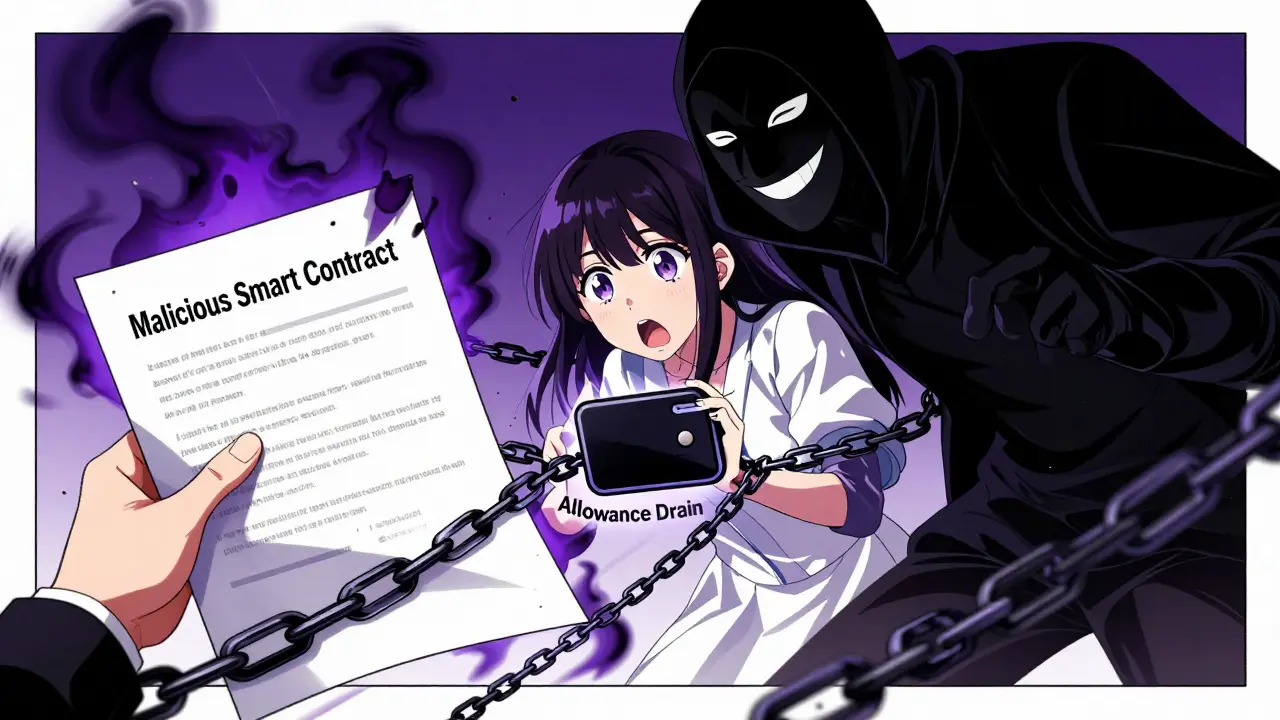
In reality, you are signing a Malicious Smart Contract is code deployed on the blockchain that grants unlimited spending permissions to the attacker's address. Once you sign, the contract drains your ETH, SOL, or other native tokens. Alternatively, it may approve the transfer of all your ERC-20 tokens to the scammer. This is known as an "Allowance Drain." Unlike a direct theft where they take what you have right now, an allowance lets them take anything you deposit in the future.
Another variation involves "Bridge Scams." You are told to bridge your assets to the "IMM Network" to participate. You send your crypto to a contract address, but nothing comes back. The network doesn't exist. The funds are gone forever.
Verifying Legitimate Airdrops vs. Scams
Not all airdrops are scams. Projects like Arbitrum, Optimism, and Starknet have distributed billions of dollars in tokens to early users. So how do you tell the difference between a real opportunity and a trap? Use this checklist before connecting your wallet to any unknown site.
- Official Channels Only: Does the project have a verified presence on official channels? Check their GitHub repository. Are there recent commits? Real developers code. Scammers copy-paste websites.
- Team Transparency: Can you identify the founders? Do they have LinkedIn profiles or past track records? Anonymous teams are higher risk, especially for large financial commitments.
- Audits: Has the smart contract been audited by a reputable firm like CertiK, OpenZeppelin, or Trail of Bits? An audit is not a guarantee of safety, but the lack of one is a huge red flag.
- No Upfront Fees: Legitimate airdrops never ask you to pay to claim. Gas fees are paid to the network, not sent to a random wallet address. If a transaction sends funds to a private key, stop immediately.
- Community Sentiment: Look beyond the hype. Search for "Project Name + Scam" or "Project Name + Review." Real communities discuss utility and technology, not just price pumps.
Protecting Your Wallet in 2026
The landscape of wallet security has evolved. Relying solely on a password is no longer enough. You need a layered approach to protect your assets from both hacks and accidental approvals.
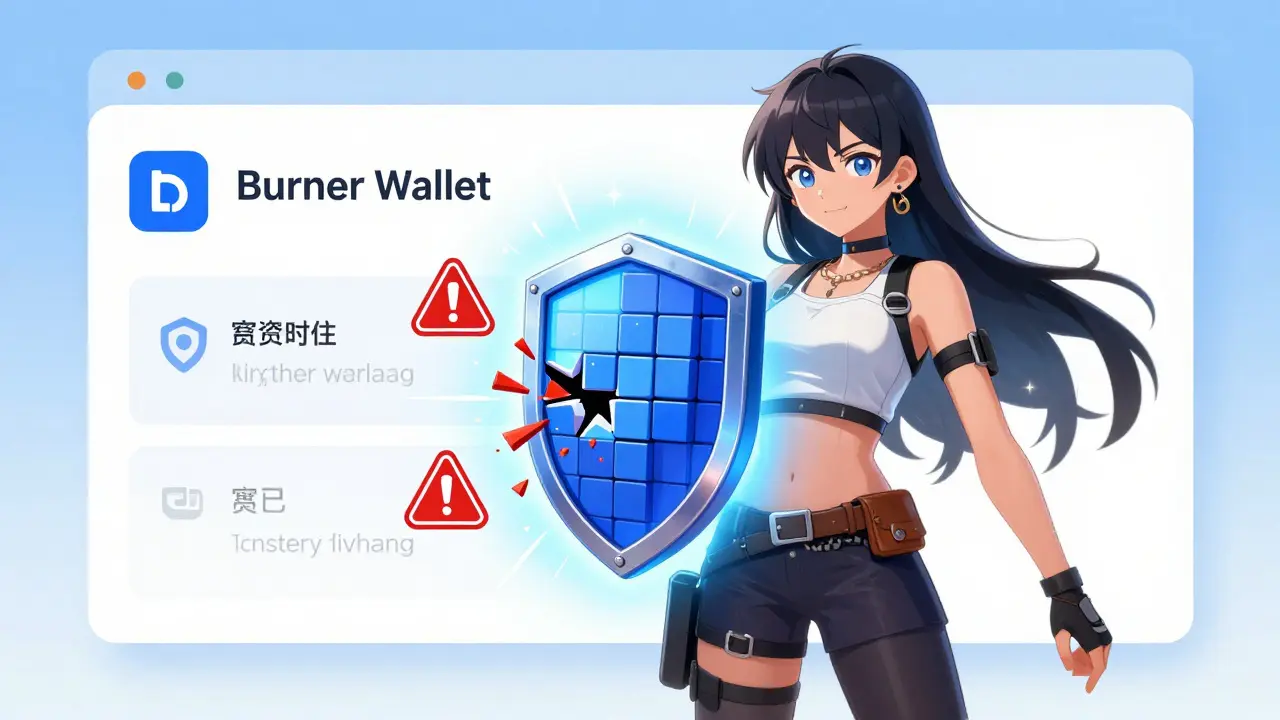
First, use a Burner Wallet is a separate cryptocurrency wallet used exclusively for interacting with untrusted or new protocols. Never connect your main wallet, which holds your long-term savings, to new dApps or airdrop sites. Create a secondary wallet with only a small amount of funds. If you get drained, your main assets remain safe.
Second, manage your allowances regularly. Tools like Revoke.cash or Etherscan's Token Approval feature allow you to see which contracts have permission to spend your tokens. Revoke any permissions you no longer need. This is crucial after interacting with any new platform.
Third, consider hardware wallets. Devices like Ledger or Trezor keep your private keys offline. Even if your computer is infected with malware, the attacker cannot move your funds without physical access to the device and your PIN. For significant holdings, this is non-negotiable.
What to Do If You've Already Interacted
If you connected your wallet to a suspicious "IMM" site, act quickly. Time is critical. First, check your transaction history. Did you send funds? If so, unfortunately, blockchain transactions are irreversible. Contacting support won't help because there is no central bank to reverse the charge.
If you signed a transaction but haven't lost funds yet, you likely granted an allowance. Go to a revocation tool immediately. Connect your burner wallet (not your main one!) and revoke all approvals for the suspicious contract. Then, move any remaining assets from that wallet to a fresh, clean wallet. Treat the compromised wallet as toxic. Do not use it again.
Report the incident. Share the contract address and URL on social media to warn others. While this won't recover your funds, it helps the community stay safe. Platforms like Twitter and Reddit often have dedicated threads for reporting scams.
Legitimate Alternatives to Watch
While the "IMM" airdrop appears to be a myth or a scam, the broader airdrop ecosystem remains vibrant. Instead of chasing ghosts, focus on projects with strong fundamentals and active development. Look for ecosystems that reward early usage.
| Project Type | Key Activity | Risk Level | Potential Reward |
|---|---|---|---|
| Layer 2 Scaling Solutions | Bridging funds, swapping tokens, using dApps | Medium | High (Historical precedent) |
| Decentralized Exchanges (DEX) | Providing liquidity, trading volume | Low-Medium | Medium-High |
| Modular Blockchains | Running nodes, data availability tasks | High (Technical skill needed) | Very High |
| Fake "Quick Claim" Sites | Connecting wallet, signing unknown txs | Critical (100% Loss) | None |
Focus on building a genuine footprint in the ecosystem. Use testnets. Provide liquidity on reputable DEXs. Run nodes if you have the technical skills. These activities carry intrinsic value even if an airdrop doesn't materialize. You are participating in the network's growth, which is the true spirit of decentralization.
Conclusion: Stay Skeptical, Stay Safe
The allure of free crypto is powerful, but the cost of ignorance is high. The "IMM airdrop" serves as a cautionary tale. In the absence of verifiable information, assume the worst. Verify sources, use burner wallets, and never sign transactions you don't fully understand. The crypto market rewards patience and diligence, not greed and haste. Protect your keys, and they will protect you.
Is there a legitimate IMM cryptocurrency?
As of mid-2026, there is no widely recognized, legitimate cryptocurrency project with the ticker "IMM" that has announced a verified public airdrop. Any claims otherwise are likely scams or impersonations of other projects.
How can I tell if an airdrop is a scam?
Red flags include unsolicited messages, requests to pay upfront fees, anonymous teams, lack of audits, and URLs that mimic legitimate brands. Always verify information through official project channels like GitHub and verified social media accounts.
What should I do if I connected my wallet to a fake airdrop site?
Immediately revoke all token approvals using a tool like Revoke.cash. Move any remaining funds to a new, secure wallet. Consider the compromised wallet unsafe for future use and report the scam contract address to the community.
Are all airdrops risky?
Not all, but many carry risks. Legitimate airdrops from established projects require interaction with their ecosystem (bridging, swapping). However, "free claim" sites that ask for no prior activity are almost always scams. Due diligence is essential.
What is a burner wallet and why should I use one?
A burner wallet is a secondary wallet used for high-risk interactions like testing new dApps or claiming uncertain airdrops. It isolates your main assets from potential smart contract exploits or phishing attacks.