

Imagine a platform where the word "blockchain" is intentionally hidden from the user. That's exactly the direction Mercado Bitcoin is the largest cryptocurrency exchange in Brazil and South America, which has evolved into a comprehensive financial services hub. Founded back in 2013 by Rodrigo Batista, it started as a way to help people in Latin America deal with economic instability and high inflation. Today, it's less of a pure trading venue and more of a "financial super app" for Brazilians.
If you're based in Brazil, this platform is likely your first stop for crypto. But if you're an international trader, you might find it a bit restrictive. The exchange is leaning heavily into the Brazilian market, focusing on the BRL (Brazilian Real) and local payment systems. Let's break down whether this giant is actually a good fit for your portfolio or if you should look elsewhere.
Quick Takeaways: The Pros and Cons
Before we get into the weeds, here is the high-level view of what you're getting with Mercado Bitcoin.
- The Good: Massive selection of 330+ cryptocurrencies, deep liquidity for BRL pairs, and annual audits by EY since 2022.
- The Bad: Only supports BRL (no other fiat), a primary interface in Portuguese, and a low security score (24/100) from some technical reviewers.
- The Weird: They are actively trying to make the "crypto" part of their business invisible to the end user to attract a more traditional crowd.
Trading Experience and Asset Variety
For most users, the primary goal is simply to buy and sell coins. Mercado Bitcoin offers a staggering 330+ cryptocurrencies, which is more than many global giants. This variety means you aren't just stuck with the big names; you can find a wide array of altcoins right here.
However, the trading experience is geared toward the cautious. You'll only find 1x leverage here. If you're a degene trader looking for 100x leverage to gamble on a meme coin, you're in the wrong place. This conservative approach reduces the risk of sudden liquidations but might bore professional speculators.
The interface is generally praised as beginner-friendly. Whether you use the web browser or the mobile apps for Android and iOS, the flow is smooth. Just keep in mind that the mobile apps lack some "pro" touches, like Face ID login or direct TradingView integration, which can be a pain if you rely on advanced charting tools.
Fees, Deposits, and Withdrawals
Fees are where you'll see a significant impact on your bottom line. Mercado Bitcoin uses a maker-taker model. If you're a maker (providing liquidity), you pay 0.3%. If you're a taker (taking liquidity), you'll pay 0.7%. These are slightly higher than some global competitors, but they do offer discounts if your trading volume is high enough.
| Attribute | Value / Detail |
|---|---|
| Maker Fee | 0.3% |
| Taker Fee | 0.7% |
| Min Deposit | R$1 (BRL) |
| Min Withdrawal | $1 |
| Fiat Support | BRL Only |
| Payment Methods | Bank Transfers, PIX, Crypto |
One of the biggest wins for Brazilians is the integration with PIX. Because PIX is the central bank's instant payment system, funding your account is nearly instantaneous and incredibly cheap. If you're a non-resident, however, the account verification process can be a nightmare, with some users reporting significant delays and barriers when they don't have Brazilian identification.

Security: The Red Flags and the Safeguards
This is where the reviews get contradictory. On one hand, Mercado Bitcoin has a dedicated cybersecurity team and undergoes annual audits by EY (Ernst & Young), which is a big deal for institutional trust. They also report data to the ANPD (Brazil's National Data Protection Authority), ensuring they follow local privacy laws.
On the other hand, some technical assessments are brutal. TradingFinder gave them a "D" security rating with a score of 24/100. While a big firm's audit is great, these technical scores often look at things like API vulnerabilities or the speed of patching. For the average user, 2FA (two-factor authentication) and asset segregation provide a decent safety net, but high-net-worth individuals might want to keep their long-term holdings in a cold wallet rather than leaving them on the exchange.
The Shift to a "Financial Hub"
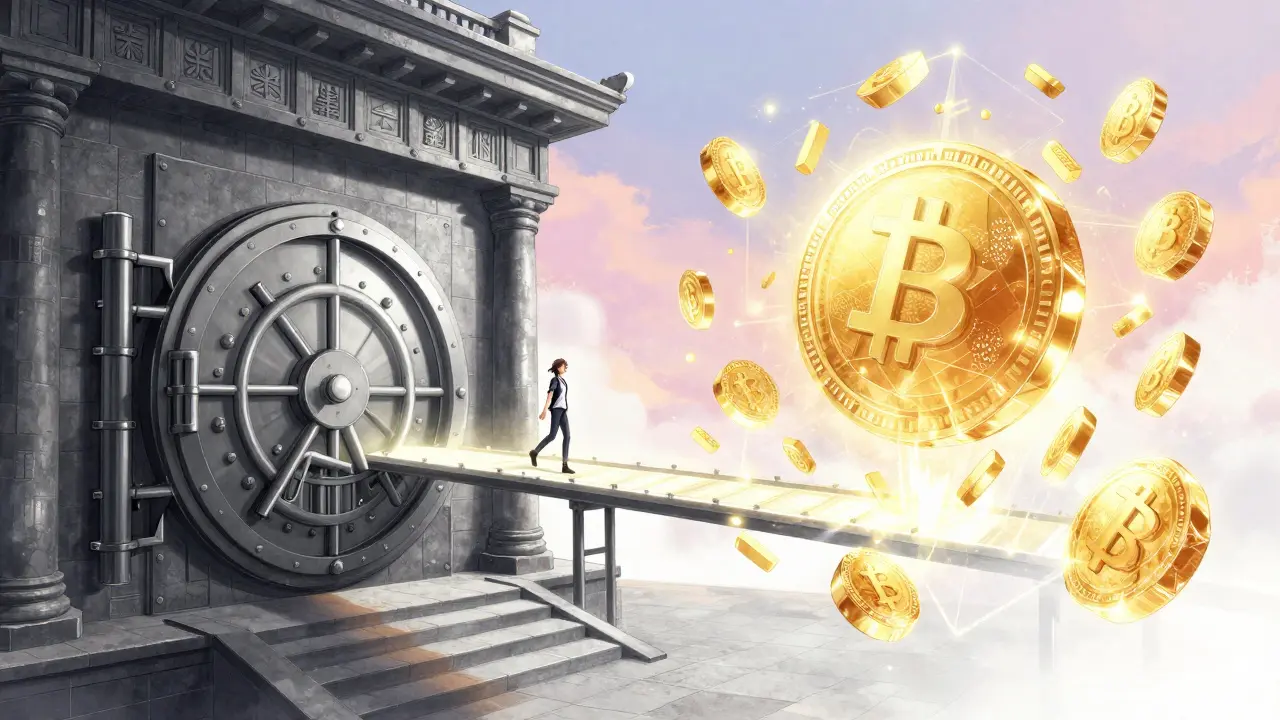
Something strange is happening at Mercado Bitcoin. They are moving away from being just a crypto exchange. In fact, core revenue from crypto trading now makes up less than 60% of their total income. They are pivoting toward what they call a "financial hub."
What does that actually mean? It means they're offering digital fixed income products and tokenized credit. They've set a goal to surpass $560 million in tokenized credit issuance. Essentially, they're using Blockchain technology to create better financial products, but they don't want the customer to actually *know* it's blockchain. They want you to care about the interest rate and the maturity date, not the smart contract address. This strategy is designed to attract the millions of Brazilians who are tired of traditional banks but are intimidated by the word "crypto."
Who is this exchange actually for?
Let's be honest: if you don't live in Brazil or have a strong connection to the Brazilian Real, Mercado Bitcoin is probably not for you. The language barrier is real-the primary interface is Portuguese, and English support is limited. Furthermore, they explicitly restrict services in several countries, including the United States, Iran, and Syria.
But if you *are* in Brazil, it's a powerhouse. The liquidity is some of the best in the region, meaning you can buy and sell Bitcoin without seeing massive price slips. It's the most convenient way to enter the market using local currency and regulatory-compliant channels.
Is Mercado Bitcoin safe for long-term storage?
While they have annual audits by EY and use 2FA, some technical reviewers have given them low security scores. For small amounts, it's convenient, but for significant holdings, using a hardware wallet is always recommended regardless of the exchange.
Can I use Mercado Bitcoin if I live in the US?
No. Currently, the exchange has service restrictions in the United States, making it inaccessible for US residents.
What are the trading fees?
The fee structure is 0.3% for makers and 0.7% for takers, though these may decrease if you trade very high volumes.
Does it support other currencies besides the Brazilian Real?
No, the platform operates exclusively with BRL for fiat deposits and withdrawals, which limits its use for international traders.
How long does account verification take?
For Brazilian residents, the process is usually straightforward and typically takes between 24 and 48 hours.
Final Steps and Troubleshooting
If you've decided to give Mercado Bitcoin a try, here's how to handle a few common hiccups:
- Verification Issues: If your account is stuck in "pending" for more than 48 hours, double-check that your documents are clear and match your BRL bank account name exactly.
- Language Barriers: Use a browser-based translator (like Google Translate) if you're struggling with the Portuguese interface, as the native English options are sparse.
- Deposit Delays: While PIX is instant, traditional bank transfers can take longer. If a deposit doesn't show up after 72 hours, open a support ticket immediately.
- App Performance: If the mobile app feels sluggish during high volatility, switch to the web browser version for a more stable trading experience.
Deepak Prusty
April 8, 2026 AT 05:29The 0.7% taker fee is actually quite steep when you compare it to global standards where 0.1% is the norm for high-volume platforms.
vijendra pal
April 9, 2026 AT 02:37Omg why does no one talk about PIX!! It is litly the best way to move money in Brazil 🇧🇷✨ The speed is just insane compared to old bank transfers lol 😂
david head
April 10, 2026 AT 05:18totally agree on the pix thing it makes everything so much easier 🚀
Alexandra Lance
April 11, 2026 AT 01:53Sure, "annual audits by EY" sounds great until you realize the big firms always sign off on the collapse of the next big thing 🙄🤡 Just another way to lure in the sheep while they hide the actual blockchain mechanics 👁️
Bruce Micciulla Agency
April 12, 2026 AT 11:22looking at the 24/100 security score its pretty obvious that the systemic risk outweighs any local convenience because once you have a breach the audit history doesn't actually protect your private keys if the api is leaking like a sieve
Patty Levino
April 14, 2026 AT 03:09If anyone is feeling overwhelmed by the Portuguese interface, I've found that using the Chrome auto-translate feature works surprisingly well for the basic trading screens.
Hugo Lopez
April 15, 2026 AT 19:34It is interesting to see how they are tailoring the experience for the local market! 🌟 I think the focus on financial inclusion over technical jargon is actually a very smart move for growth. 😊
Emma Pease-Byron
April 17, 2026 AT 14:55The attempt to make blockchain "invisible" is simply a confession that the average user finds the technology incomprehensible, which is exactly why these platforms can charge such exorbitant fees without facing immediate backlash.
Trish Swanson
April 18, 2026 AT 10:00BRL only is a huge limit!!! Why not USDT??
Susan Wright
April 20, 2026 AT 08:30For those wondering about the tokenized credit, basically they're turning real-world debts into digital tokens to get better yields. It's a way to get fixed income without going through a traditional bank's slow approval process.
Sharhonda Walker
April 21, 2026 AT 16:43definitly use a hardwere wallet for the big bags. dont trust no exchange with your life savings especially with that security score lol
Earnest Mudzengi
April 21, 2026 AT 18:19This whole "financial hub" pivot smells like a centralized honey pot for the state to track every single satoshi movement under the guise of BRL integration. They're just building a digital panopticon using tokenized credit to keep the populace in line while the US gets blocked from the party because we actually value sovereignty. Get your assets off these CEXs and into a cold storage vault before the regulatory capture is complete and they freeze your accounts for a "compliance review".
sekhar reddy
April 22, 2026 AT 04:29I cannot believe people actually trust these platforms with their money!! The drama of a potential hack is just waiting to happen and the stress is simply too much for me to handle 😱
Arwyn Keast
April 24, 2026 AT 03:14Absolute rubbish. The maker-taker spread is laughable for any serious trader. In the UK we have platforms that actually understand liquidity without bleeding the user dry through predatory fees.
Arlen Medina
April 24, 2026 AT 03:43Man the US being blocked is just typical. We don't need some Brazilian app anyway when we got the biggest markets in the world right here. They're just scared of the SEC!
Suzanne Robitaille
April 25, 2026 AT 11:04It's almost poetic how they want to hide the very technology that gives the platform its value. It's a dance between the old world of finance and the new digital dawn, wrapped in a layer of corporate safety.
Krystal Moore
April 25, 2026 AT 21:41Imagine being so intimidated by a word that you need a "financial hub" to hold your hand. It's honestly a bit sad that we've reached a point where financial literacy is so low that the technology has to be hidden to sell it.
Manisha Sharma
April 26, 2026 AT 02:13Typical of these western reviews to focus on security scores. In India we build things that actually scale. This brazilian approach is just a pale imitation of what we do with digital payments anyway lol
Diana Martín Prieto
April 27, 2026 AT 09:24For anyone struggling with the 48-hour verification wait, make sure your photo is high res and you're not using a cropped version of your ID. It usually triggers the manual review which takes way longer.
Susan Payne
April 27, 2026 AT 22:04The lack of Face ID on the mobile app is an unacceptable oversight for a platform claiming to be a "giant". It is an amateurish mistake that reflects a lack of commitment to user experience.
gladys christine
April 28, 2026 AT 01:02just keep pushing forward everyone!! it's all about the journey of learning 🌈✨
Evan Borisoff
April 29, 2026 AT 21:58The integration of BRL only creates a massive bottleneck for capital flow which basically ensures that the platform remains a local silo rather than a global contender despite the asset variety they claim to offer because you can't effectively hedge without multiple fiat pairs in a volatile market like the one we are currently navigating.
Joshua Aldrich
May 1, 2026 AT 19:19I think we gotta remember that for a lot of people in Brazil, just getting away from the inflation of the real is the win. The tech stuff is secondary to actually keeping your money's value. Its like, why care about the plumbing if the water is finally clean right?
Brooke Herold
May 3, 2026 AT 16:30The focus on the local Brazilian culture and currency makes it a very specialized tool.
Taylor Meadows
May 3, 2026 AT 23:27I've seen this pattern before. They hide the tech, they invite the crowds, and then they tighten the grip once the liquidity is trapped. Just wait until the "financial hub" starts deciding who can withdraw based on "social credit" metrics. 🙄