
Renewable Energy Opportunity Cost Calculator
Energy Opportunity Cost Calculator
Norway uses 90% renewable energy but has limited grid capacity. This calculator shows how energy used for crypto mining could be redirected to industries that create jobs and economic value.
Energy Opportunity Cost
This shows that 5,000 kWh of renewable energy was used for mining but could have been used for alternative industries, creating economic value. In Norway's case, this represents electricity that could power 1,000+ homes or support job-creating manufacturing.
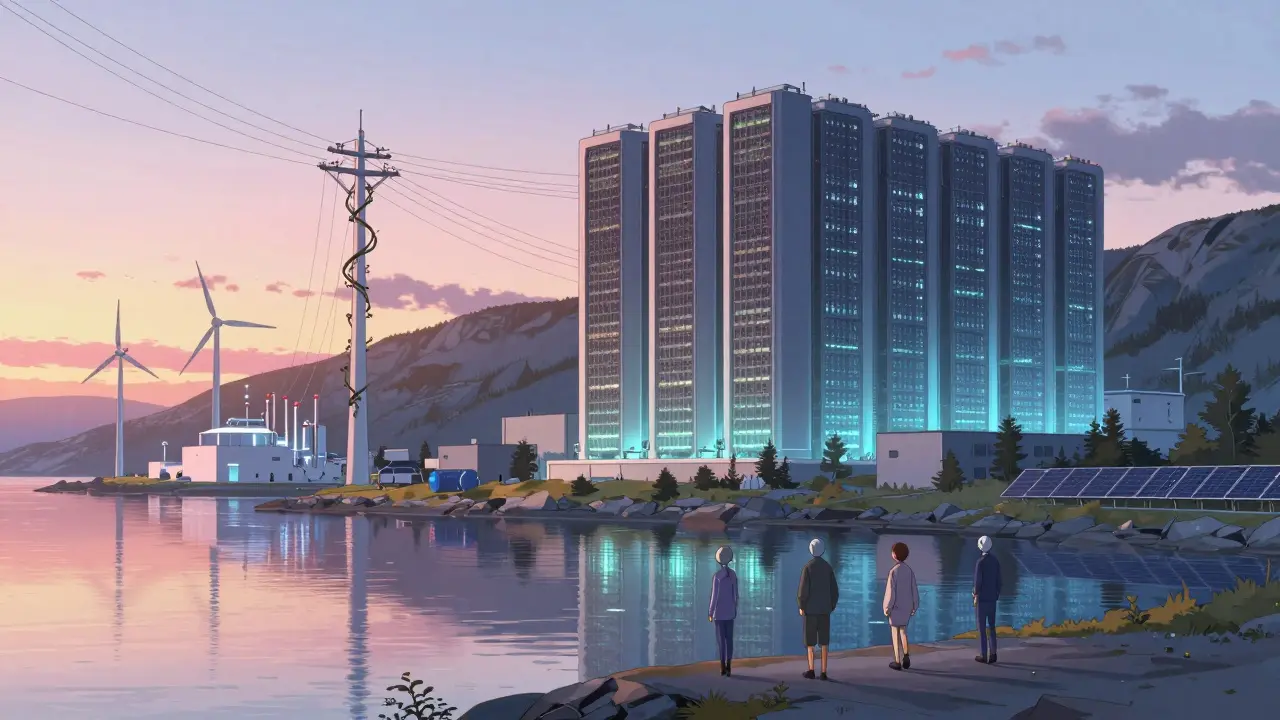
Norway, a country with more hydropower than it knows what to do with, is moving to stop new cryptocurrency mining operations. Not because Bitcoin is illegal. Not because it’s dangerous. But because it’s wasting something too valuable to waste: clean electricity that could power real jobs, real industries, and real communities.
Why Norway Is Saying No to New Crypto Mines
Norway has been a magnet for crypto miners since the early 2010s. Why? Cheap, renewable energy. The country generates over 90% of its electricity from hydropower. Miners from the U.S., Russia, and China set up shop in former fish factories and abandoned industrial sites, drawn by low prices and green credentials. By 2024, crypto mining was using roughly 1.5% of Norway’s total electricity-enough to power 300,000 homes.
But here’s the problem: those mines don’t pay taxes. They don’t hire local workers. They don’t build schools or roads. They just suck up power and send digital coins overseas. The Norwegian Labour Party government called it a bad deal. In June 2025, Minister for Digitalization Karianne Tung said it plainly: "Cryptocurrency mining is very power-intensive and generates little in the way of jobs and income for the local community."
So they proposed a ban-on new crypto mining data centers. Existing operations? They can keep running. But no new ones. The ban is meant to be temporary, possibly taking effect in autumn 2025, giving regulators time to gather data and reassess later.
It’s Not About Environment-It’s About Opportunity Cost
很多人以为挪威禁矿是因为环保。其实不是。挪威的电力已经100%可再生,碳足迹几乎为零。问题不是污染,是机会成本。
Imagine you have a factory that runs on free solar power. You could use it to make aluminum for aircraft parts-jobs, exports, skilled workers. Or you could use it to run thousands of ASIC chips that just hash numbers all day. Which one helps your country grow?
Norway chose the aluminum. They’re prioritizing industries that create real economic value: manufacturing, green tech, data centers for healthcare or education. Crypto mining doesn’t fit. Even if it’s "green," it’s still using energy that could be doing more.
It’s like renting out your spare room to someone who never cleans up, never pays rent, and just leaves their dirty socks everywhere. You might not mind the mess-but you’d rather rent it to someone who pays, respects your space, and contributes to the neighborhood.
How the Ban Works (And What’s Left Out)
The proposed law doesn’t touch existing mines. It doesn’t ban Bitcoin ownership. It doesn’t make crypto trading illegal. Norway still allows you to buy, sell, and hold crypto. Gains are taxed. Exchanges must follow anti-money laundering rules. This ban is laser-focused: no new mining facilities.
Miners can’t just move to a new building and restart. The government is using the Planning and Building Act to control land use and energy allocation. Any new data center applying for permission will be turned down if it’s meant for crypto mining.
And they’re not flying blind. Since early 2025, all data centers-crypto or not-must register with the government. This gives officials a clear picture of who’s running what, how much power they use, and where. That data helped them decide: new crypto mines are a net loss.
What This Means for the Global Crypto Industry
Norway isn’t the first country to crack down on crypto mining. China banned it outright in 2021. Russia banned it in 10 regions in early 2025. New York put a two-year pause on carbon-powered mining in 2022. Kosovo banned it entirely after blackouts in 2022.
But Norway’s move is different. It’s not about fear. It’s about choice. Other countries banned mining because they couldn’t keep the lights on. Norway is banning it because they can keep the lights on-and they’d rather use that power for something better.
This could be a turning point. Countries with cheap renewable energy-like Iceland, Canada, Sweden, or even parts of the U.S. Pacific Northwest-are watching closely. If Norway’s ban works, others might follow. Why let miners drain your clean energy when you could attract a semiconductor plant or a hydrogen fuel facility instead?

What Miners Are Saying
Some crypto advocates argue that mining drives investment in renewable energy. They say miners build new dams or wind farms just to power their rigs. That’s true in a few cases-but it’s not the norm. Most miners in Norway just plugged into the existing grid. They didn’t build new infrastructure. They just took what was already there.
Industry groups say the ban is unfair. "We’re using excess capacity," they argue. But the government counters: there’s no such thing as "excess" when you’re a small country with limited grid flexibility. Even a 1.5% draw matters when you’re trying to keep electricity prices stable for families and factories.
Some miners are already relocating. A few have moved to Georgia or Kazakhstan. Others are trying to negotiate exemptions. But the Norwegian government isn’t budging. They’re not anti-crypto. They’re pro-priority.
What Comes Next?
The ban was proposed for autumn 2025. As of December 2025, it’s likely already in effect. Official details are still being finalized, but the direction is clear: no new mines. Existing ones stay, but they’re under closer watch.
The government says the ban is temporary. That means if mining becomes more efficient-say, if new chips use 50% less power-or if crypto starts creating real local jobs, they’ll reconsider. But for now? The message is simple: your energy is ours to decide.
Norway’s move isn’t about stopping innovation. It’s about making sure innovation serves its people first. And that’s a lesson other energy-rich countries might need to learn before it’s too late.
Is cryptocurrency mining illegal in Norway?
No, cryptocurrency mining is not illegal in Norway. The government has not banned existing mining operations. The proposed restriction only blocks new data centers from being built for crypto mining. You can still own, trade, and mine Bitcoin legally-but you can’t start a new mining facility.
Why is Norway banning crypto mining if it uses renewable energy?
Norway uses renewable energy, but it’s not unlimited or free. The government believes the electricity used for mining could be better spent on industries that create jobs, tax revenue, and long-term economic growth-like manufacturing, green tech, or healthcare data centers. Even clean energy has an opportunity cost.
Does the ban apply to all types of cryptocurrency mining?
Yes, the ban targets all power-intensive cryptocurrency mining operations, regardless of the coin. Whether it’s Bitcoin, Ethereum, or a new altcoin, if the facility uses large amounts of electricity for mining, it’s covered. The government hasn’t specified technical thresholds, but the focus is on large-scale, industrial mining centers.
Can existing crypto mines keep operating?
Yes. The ban only applies to new mining facilities. Existing operations are allowed to continue, but they must now register with the government and report their energy use. This gives authorities better oversight and ensures they’re not secretly expanding.
What happens if a company tries to build a new crypto mine anyway?
Any new application for a data center intended for crypto mining will be denied under Norway’s Planning and Building Act. If a company tries to build without approval, they face fines, forced shutdowns, and legal action. The government has clear authority to enforce this, and they’ve already started reviewing permits.
Is Norway the only country doing this?
No. China banned mining in 2021. Russia banned it in 10 regions in early 2025. New York paused carbon-powered mining in 2022. Kosovo banned it entirely after blackouts. But Norway is unique because it’s a country with abundant clean energy choosing to say no-not because it can’t afford the power, but because it wants to use that power for something more valuable.
Patricia Amarante
December 14, 2025 AT 22:02This is actually kind of brilliant.
Greg Knapp
December 15, 2025 AT 14:07So let me get this straight - Norway’s like ‘nah we ain’t letting you turn our hydropower into digital lottery tickets’? I’m here for it. These miners are just digital squatters with ASICs.
George Cheetham
December 16, 2025 AT 04:44What’s fascinating here isn’t the ban - it’s the mindset. Most countries see energy as a commodity to be sold. Norway sees it as a public trust. That’s a philosophical shift most economies haven’t even begun to grasp. We’re not just talking policy - we’re talking values.
Sally Valdez
December 18, 2025 AT 00:28Oh wow another socialist eco-dictatorship flexing. Next they’ll ban people from breathing too hard because it uses oxygen. Wake up sheeple - crypto is freedom. Norway’s just jealous they don’t have any Bitcoin mines of their own.
Craig Nikonov
December 18, 2025 AT 15:03They’re not banning mining - they’re banning capitalism. This is just the first step. Next they’ll track your toaster usage and charge you for ‘excess heat emissions’. The deep state is using crypto as an excuse to control every watt of power on the planet. You think this is about jobs? Nah. It’s about control.
Cheyenne Cotter
December 19, 2025 AT 00:30Look, I get the sentiment, but let’s be real - if you’re going to ban crypto mining, you’ve got to ban all the other weird energy hogs too. Like those data centers running AI models that generate cat memes for TikTok. Or the ones powering endless Zoom calls where people wear pajamas and pretend they’re productive. Why single out mining? It’s arbitrary. And hypocritical. We’re picking one villain because it’s easy to hate, not because it’s the biggest problem.
Tom Joyner
December 20, 2025 AT 13:04The opportunity cost argument is intellectually elegant - but it assumes Norway’s energy grid is a zero-sum game. It ignores the possibility of dynamic pricing, load-shifting, and ancillary services. Miners can act as grid stabilizers during surplus periods. To ban them outright is to reject innovation under the guise of prudence - a hallmark of technologically immature governance.
Amy Copeland
December 21, 2025 AT 10:02Oh so now Norway’s the moral compass of the world? Cute. They’ve got more oil money in their sovereign wealth fund than most countries have GDP. Let them play virtue signaling with their hydropower. Meanwhile, the rest of us are building real economies. 😴
Samantha West
December 21, 2025 AT 23:55It’s not about whether crypto is good or bad - it’s about who gets to decide how public resources are allocated. Norway’s government is asserting sovereignty over its energy infrastructure, and that’s a profound precedent. When a nation chooses to protect its domestic economic future over global speculative flows, it’s not anti-innovation - it’s pro-sovereignty. And frankly, the rest of the world should be paying attention.
Sammy Tam
December 22, 2025 AT 03:03I used to mine crypto back in 2017 with a couple GPUs in my garage. Now I work in renewable grid design. Honestly? This makes sense. Mining’s like using a Ferrari to haul bricks - you *can* do it, but why? Norway’s choosing to build things that last. I respect that.
Jesse Messiah
December 22, 2025 AT 10:28Y’all are overthinking this. Norway’s just saying: ‘We got the juice, we ain’t givin’ it to no ghost companies that don’t pay taxes or hire locals.’ Simple. Smart. Done. 🤝
Terrance Alan
December 24, 2025 AT 08:45It’s not about jobs or taxes or even energy - it’s about identity. Norway is saying: we are not a server farm. We are not a digital utility. We are a society with culture, with families, with schools, with fishermen and engineers and nurses. And we refuse to become the power plant for a global casino that doesn’t even have a license to operate here. This is a statement of dignity.
Kelsey Stephens
December 24, 2025 AT 22:57I love how this isn’t a moral panic - it’s a pragmatic decision. No hysteria. No bans on ownership. No witch hunts. Just: ‘We have a finite resource, and we’re going to use it where it creates the most value.’ That’s leadership. Not perfect, but damn close.
Dionne Wilkinson
December 26, 2025 AT 17:09It reminds me of when my grandma would say, ‘Just because you can do something doesn’t mean you should.’ That’s Norway right there. They could let the miners in. But they chose not to. Not because they’re scared. Because they’re wise.
Elvis Lam
December 28, 2025 AT 09:22Let’s not pretend this is some grand ethical stand. The truth? Norway’s grid is maxed out during winter. Miners were causing price spikes for households. The government didn’t ban mining because it’s evil - they banned it because it was making electricity more expensive for retirees and single moms. That’s the real story.
Sean Kerr
December 29, 2025 AT 04:58YESSSSSS!!! 🙌 Norway’s got it right!! 🇳🇴⚡️ Stop letting crypto bros turn your clean energy into digital gambling chips!! I’m so proud of them!! 😭👏👏👏
Emma Sherwood
December 30, 2025 AT 08:13For those who say ‘but crypto drives green energy!’ - show me the data. Most miners in Norway didn’t build a single turbine. They just plugged into the grid like freeloaders at a potluck. Meanwhile, companies like Hydro and Equinor are investing in green aluminum and hydrogen - real industries that create 10x the jobs. This isn’t anti-tech. It’s pro-sustainable growth.
Rebecca Kotnik
December 31, 2025 AT 09:46While the moral and economic logic is compelling, one must consider the precedent this sets for international capital mobility. If nations begin to selectively restrict digital asset infrastructure based on perceived economic utility, it may catalyze a fragmentation of the global digital economy - a trend already observable in regulatory divergence across jurisdictions. This could inadvertently incentivize jurisdictional arbitrage, ultimately undermining the very transparency and accountability mechanisms Norway seeks to preserve.
Jack Daniels
January 1, 2026 AT 06:57They’re just mad their neighbors got rich mining Bitcoin and they didn’t. Classic envy. Let the free market decide. Not some bureaucrat with a clipboard.
Donna Goines
January 1, 2026 AT 22:38Wait - so if they ban new mines, what’s stopping someone from buying an old one and just ‘upgrading’ it? This law is a joke. They’ll just call it a ‘data center for AI’ and keep mining. This is all theater. They know it. We know it. The miners know it. It’s just a way to look like they’re doing something while the real power players keep operating.
Jonny Cena
January 3, 2026 AT 17:02Hey, I get why this feels heavy - but think about it like this: if you had a garden and someone kept showing up to water their plants with your hose, but never helped you plant anything… wouldn’t you say ‘hey, maybe I should just lock the spigot’? Norway’s not being mean. They’re just finally saying ‘this is my home, and I’m choosing what grows here.’
Heather Turnbow
January 4, 2026 AT 05:08I appreciate how this decision avoids demonization. No outrage. No witch hunts. Just clear, evidence-based policy: mining uses X amount of energy, generates Y economic benefit, and we’ve identified Z alternatives that yield higher returns. That’s governance grounded in data, not ideology. It’s rare, and it’s beautiful.
Timothy Slazyk
January 5, 2026 AT 21:46Here’s what nobody’s saying: Norway’s move isn’t about crypto. It’s about power. Real power. The kind that comes from deciding what your country values - and having the guts to act on it. Most nations are still stuck in the ‘growth at all costs’ mindset. Norway just said: growth without purpose is just noise. And that? That’s the most revolutionary thing they could’ve done.