

Remittance Cost Calculator
Calculate how much you could save when sending money through P2P crypto versus traditional services in Bangladesh. Based on real-world usage data from the article.
Traditional Fee:
P2P Crypto Fee:
- Always use Send Money in bKash/Nagad (never Cash In)
- Only trade on verified Binance P2P sellers
- Never share transaction IDs with strangers
In Bangladesh, buying and selling cryptocurrency isn’t legal - but it’s happening anyway. Millions of people are using peer-to-peer (P2P) methods to trade crypto daily, even though the central bank has banned it since 2014. The government says it’s against the law. The people say they need it to send money home, pay for services, or protect their savings from inflation. And with over 3.5 million crypto users in a country of 170 million, the gap between law and reality is wide - and growing.
Why People Trade Crypto in Bangladesh
The main reason isn’t speculation. It’s survival. Bangladesh receives over $21 billion in remittances every year from workers abroad. Traditional services like Western Union or MoneyGram charge 3% to 8% in fees. With P2P crypto, users pay as little as 0.5% to 2%. That’s thousands of dollars saved over time. Take a factory worker in Dubai sending money to his family in Sylhet. If he sends $5,000 through a bank, he pays $400 in fees. Through crypto, he pays $50. He buys USDT on Binance, sends it to his brother’s MetaMask wallet, and the brother cashes out via bKash. No bank forms. No waiting days. No middlemen. This isn’t rare. It’s routine. A 2024 survey found that 61% of P2P trades in Bangladesh use bKash. Another 29% use Nagad. These mobile money apps have over 117 million active users combined. They’re the backbone of crypto trading - even though the government never approved them for this.How P2P Crypto Trading Actually Works
There are three main ways people trade crypto in Bangladesh:- Centralized exchange P2P (like Binance) - This is the most popular. Users create an account on Binance, go to the P2P section, and choose to buy or sell USDT. They pick a seller who accepts bKash. The buyer sends money through the app. Binance holds the crypto in escrow until the seller confirms receipt. Then the crypto is released. It’s fast, secure, and works even if the exchange is blocked - users just switch to a VPN.
- Informal agents - These are local people, often mobile money agents, who act as crypto dealers. You meet them in person, give them cash or send money via Nagad, and they send you crypto. It’s risky - no escrow, no dispute system - but it’s the only option for people without smartphones or internet access. Around 12,350 of these agents operate in Dhaka alone.
- Decentralized exchanges (DEX) like PancakeSwap - For tech-savvy users, this is the most private option. You connect MetaMask to PancakeSwap on Binance Smart Chain, swap BNB for USDT, and send it anywhere. No KYC. No identity checks. But it costs more in gas fees (about $0.15 per trade) and requires understanding wallet addresses, gas limits, and network settings.
Binance dominates this space. It handles about 68% of all P2P trades from Bangladesh. Why? Because it’s simple. You don’t need to be a tech expert. You just need a phone, a bKash account, and 10 minutes to learn how to click “Buy USDT.”
The Real Risks: Fraud, Delays, and Arrests
For all the convenience, the dangers are real. In 2023, over 214 fraud cases were reported in Bangladesh, totaling ৳1.2 billion ($11 million) in losses. Most involved fake agents. A common scam: You send ৳250,000 via bKash. The agent confirms receipt. You get your crypto. Then - they reverse the bKash payment. The money disappears. The crypto stays with them. And there’s nothing you can do. bKash won’t reverse the transaction because it was sent as a “send money” transfer - not a “cash in.” The platform says it’s not their problem. Even on Binance P2P, things go wrong. During Eid holidays, mobile banking systems crash. Transactions that normally take 8 minutes can take 47. Users report being locked out of their accounts for days. One Reddit user lost ৳75,000 because he used the wrong payment method. He clicked “cash in” instead of “send money.” The system flagged it as suspicious. The trade failed. His crypto was locked. He waited 14 hours for Binance support to respond. And then there’s the legal risk. In 2022, 17 traders in Dhaka were arrested under Section 411 of the Penal Code - for “possessing stolen property.” The police didn’t charge them with crypto trading. They charged them with owning something the law says doesn’t exist. That’s how the system works: if you’re caught, you’re not breaking a crypto law. You’re breaking a foreign exchange law. And there’s no legal defense.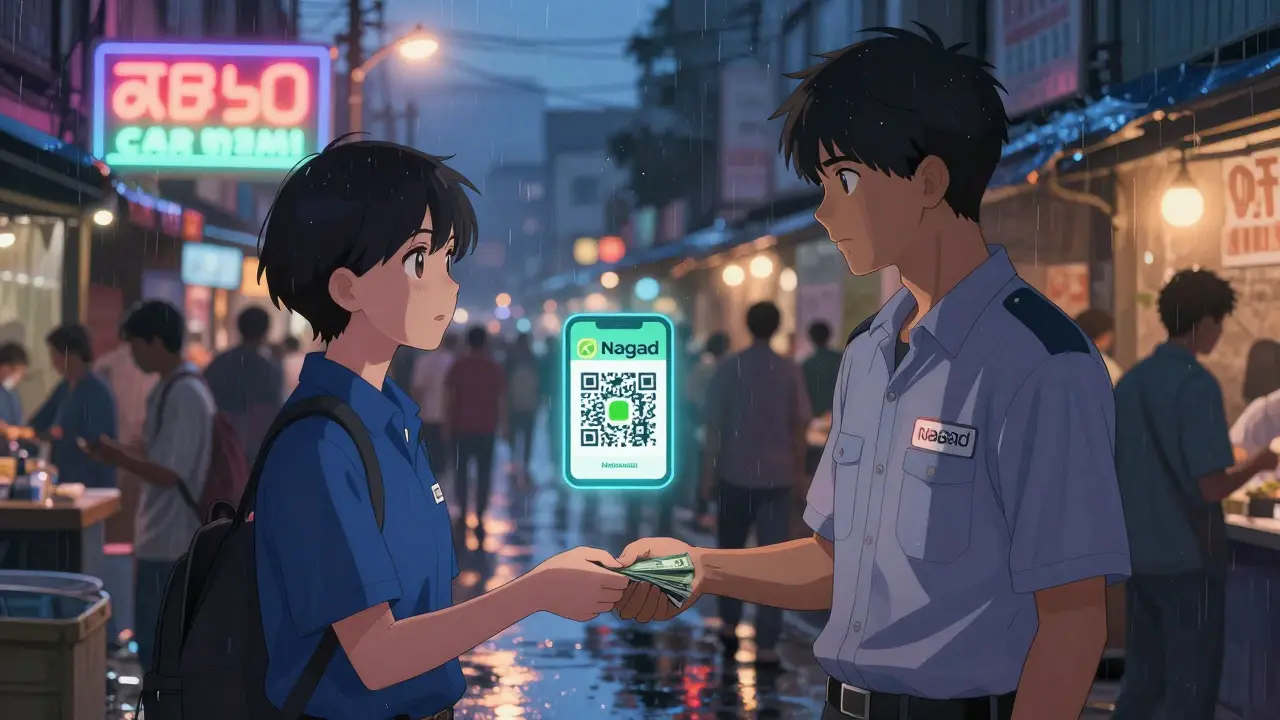
Who’s Using Crypto - And How They Learn
Most users are young. 68% are between 18 and 35. 83% live in Dhaka, Chittagong, or Sylhet. Over half are overseas workers or have family abroad. They’re not gamblers. They’re parents, students, drivers, nurses - people who need to move money fast and cheap. Getting started takes about 17.5 hours of learning, according to a 2025 study. That’s not a day. It’s weeks of trial and error. Most beginners need help. They join Telegram groups like “Crypto BD Guide,” which has over 47,000 members. They ask: “Which agent is safe?” “Why did my bKash payment fail?” “How do I set up MetaMask?” The group has blacklisted 217 fraudulent agents since 2023. They share screenshots of fake chats, warn about new scams, and even record phone numbers of known fraudsters. It’s a grassroots safety net - because the government won’t provide one.What’s Changing - And What’s Coming
In January 2025, Binance launched full Bangla language support and created dedicated liquidity pools for BDT trades. That means faster matching, better rates, and fewer delays. It’s a sign they’re betting big on Bangladesh. But the government is fighting back. Between October 2024 and January 2025, Bangladesh Bank conducted 87 raids on crypto trading hubs. They seized computers, phones, and cash worth ৳32 million ($295,000). They’re not just warning people anymore. They’re arresting them. The biggest shift? In February 2025, the government formed a 12-member Crypto Asset Task Force. Chaired by Bangladesh Bank’s Deputy Governor, it’s supposed to recommend a regulatory path by December 2025. Will they ban it completely? Or will they create a legal framework - like they did with mobile banking? One thing’s clear: the CBDC (Central Bank Digital Currency) pilot is underway. If the government launches its own digital taka, it could either replace crypto - or make it easier to regulate. Either way, the next 12 months will decide the fate of P2P trading in Bangladesh.
What You Need to Know Before You Start
If you’re thinking about trying P2P crypto in Bangladesh, here’s what you must do:- Use only verified sellers on Binance P2P - check their trade history and feedback.
- Always use “Send Money” in bKash or Nagad - never “Cash In.”
- Enable two-factor authentication (2FA) on your exchange account - 98% of users do, but don’t be the 2% who don’t.
- Never trade in person with agents unless you have a witness and a recording.
- Keep screenshots of every transaction - payment receipts, chat logs, order IDs.
- Start small. First trade? Try ৳5,000. Learn before you risk more.
Most importantly: understand that you’re doing this at your own risk. There is no government protection. No legal recourse. No insurance. If something goes wrong, you’re on your own.
What’s Next for Crypto in Bangladesh
The numbers don’t lie. P2P trading volume hit $417 million in Q1 2025 - up 38% from last year. By 2026, experts predict it could hit $1.2 billion. But if the government cracks down hard, that number could drop 80% overnight. The real question isn’t whether people will keep trading. They will. The question is whether the government will eventually recognize what’s already happening - and turn chaos into a regulated system. For now, crypto in Bangladesh isn’t a trend. It’s a workaround. A lifeline. A quiet rebellion against a system that leaves millions without access to fair financial tools. And until the banks change, the people will keep using P2P methods - one bKash transfer at a time.Is P2P crypto trading legal in Bangladesh?
No, it’s not legal. Bangladesh Bank has banned cryptocurrency since 2014 under the Foreign Exchange Regulation Act. Any transaction converting Bangladeshi taka to crypto is considered illegal. However, enforcement is inconsistent, and millions still trade using mobile money apps like bKash and Nagad. There is no legal protection for users if they’re scammed or arrested.
Can I use bKash or Nagad to buy crypto?
Yes, but only through P2P platforms like Binance. You can’t buy crypto directly from a bank or app. On Binance P2P, you select a seller who accepts bKash or Nagad. You send the money through the app using the "Send Money" option, then confirm payment on the exchange. The crypto is released once they confirm receipt. Never use "Cash In" - it triggers fraud alerts and can block your transaction.
What’s the safest way to trade crypto in Bangladesh?
The safest method is using Binance’s P2P platform with escrow protection. Always choose sellers with high trade volume and positive feedback. Never trade in person. Avoid informal agents unless you have a trusted reference. Use two-factor authentication, keep screenshots of all transactions, and start with small amounts. Even then, remember: there is no legal safety net.
Why do people use USDT instead of Bitcoin or Ethereum?
USDT (Tether) is a stablecoin pegged to the US dollar. It doesn’t swing in price like Bitcoin. In Bangladesh, where the taka loses value every year, people want to hold something stable. USDT acts like digital cash. It’s easy to convert to and from taka via mobile apps. Over 72% of all P2P trades in Bangladesh involve USDT because it’s reliable and widely accepted.
What happens if I get caught trading crypto?
You won’t be charged with "crypto trading" - because there’s no such law. Instead, you could be arrested under Section 411 of the Penal Code for "possessing stolen property," since the government claims crypto has no legal value. Equipment like phones and laptops may be seized. You could face fines or jail time. There’s no legal defense, and banks won’t help you. Many traders use VPNs and avoid keeping large amounts of crypto on their devices.
How do I avoid scams on P2P crypto platforms?
Only trade on Binance or Bybit P2P - never with strangers on Facebook or WhatsApp. Check the seller’s trade completion rate (aim for 98%+). Look for users with at least 100 completed trades. Never release crypto until you see the money in your bKash or Nagad account. If the payment says "pending," don’t release. Use the platform’s dispute system immediately if something goes wrong. Join the "Crypto BD Guide" Telegram group to learn about known scammers.
Can I use MetaMask to trade crypto in Bangladesh?
Yes, but only if you’re technically skilled. MetaMask lets you trade directly on PancakeSwap (a decentralized exchange) without needing Binance. You swap BNB for USDT, then send it anywhere. It’s anonymous and doesn’t require KYC. But you need to pay gas fees in BNB, understand wallet addresses, and avoid sending to the wrong network. It’s not recommended for beginners. Mistakes can cost you your entire balance - with no way to recover it.
Yzak victor
December 9, 2025 AT 09:27This is wild. I never realized how many people are using crypto just to survive. The fact that they’re bypassing 8% fees with 0.5% crypto transfers? That’s not innovation-that’s justice.
People in the West complain about bank fees. Meanwhile, someone in Sylhet is feeding their family because they found a way to cut out the middlemen. Respect.
Also, the bKash integration is genius. It’s like the informal economy hacked the system and won.
Holly Cute
December 9, 2025 AT 18:42Okay but let’s be real-this isn’t some noble grassroots movement, it’s just people circumventing capital controls because their government is incompetent. The fact that they’re using USDT instead of Bitcoin shows they’re not crypto true believers-they’re just using the cheapest tool available. And let’s not pretend this is sustainable. When the CBDC launches, this whole house of cards collapses. Also, 72% USDT? That’s not finance, that’s inflation hedging with a side of delusion. 🤦♀️
Billye Nipper
December 10, 2025 AT 11:28I just want to say-this is one of the most human stories I’ve read in a long time.
These aren’t speculators. They’re nurses. Drivers. Fathers. People who just want to send money home without losing half of it.
And the fact that they’ve built their own safety net through Telegram groups? That’s community at its purest.
Please don’t let this get shut down. These people aren’t breaking the law-they’re fixing a broken system.
❤️
Roseline Stephen
December 12, 2025 AT 10:46Interesting. I’m not sure I agree with the framing of this as a ‘rebellion.’ It feels more like adaptation.
People aren’t defying the state-they’re ignoring it because the state failed them. The government didn’t ban crypto because it’s dangerous. They banned it because they couldn’t control it.
And now they’re raiding traders instead of fixing the banking system. That’s the real story.
Richard T
December 12, 2025 AT 14:56Wait-so Binance handles 68% of all P2P trades in Bangladesh? That’s wild. And they just launched Bangla support? That’s not coincidence. They saw a market no one else wanted to touch and moved in.
Also, why is no one talking about how this could be a blueprint for other countries with broken remittance systems? Nigeria? Philippines? Mexico?
This isn’t just Bangladesh. It’s the future of finance in the Global South.
rita linda
December 12, 2025 AT 15:01Let me get this straight-people are using a banned financial tool to avoid paying fees to Western Union, which is owned by American corporations? And you’re calling this ‘resistance’? This isn’t rebellion. It’s economic pragmatism disguised as moral superiority.
Also, USDT? Tether? That’s a centralized, opaque, unregulated token backed by who knows what. You’re trusting a company in the Cayman Islands more than your own central bank. That’s not smart. That’s naive.
And the fact that you’re praising bKash? That’s a private company with zero accountability. The real villain here is the lack of financial literacy, not the ban.
Frank Cronin
December 14, 2025 AT 09:40Oh wow. So the solution to Bangladesh’s financial crisis is… letting people trade unregulated crypto through a platform owned by a Chinese company? Brilliant.
Let me guess-the same people who call this ‘freedom’ would freak out if they saw a U.S. citizen using a Chinese app to avoid IRS reporting.
And you think this is ‘justice’? It’s a scammer’s paradise. 214 fraud cases in one year? That’s not innovation. That’s a Ponzi with a bKash logo.
Also, ‘no legal recourse’? Exactly. That’s the point. You’re not a victim-you’re a sucker who didn’t do their homework. 😌
Tom Van bergen
December 16, 2025 AT 06:06Ben VanDyk
December 16, 2025 AT 11:23Typo: ‘bKash’ is misspelled as ‘bKash’ in the third paragraph. Also, ‘Nagad’ is capitalized inconsistently. And ‘USDT’ should be ‘USDT’ every time-no exceptions.
Otherwise, the piece is decent. But the grammar needs work. You can’t write about finance and ignore basic orthography. It undermines credibility.
Jonathan Sundqvist
December 18, 2025 AT 06:53Let me be clear: if you’re trading crypto in Bangladesh, you’re not a hero. You’re a criminal. You’re undermining national sovereignty. You’re enabling capital flight. You’re playing with fire and pretending it’s a candle.
And now you want us to celebrate this? No. This is chaos dressed up as innovation. The government should shut it down-hard.
And if you’re one of these people? You’re not a victim. You’re a liability.
Thomas Downey
December 18, 2025 AT 12:07How can anyone with a conscience look at this and not feel ashamed? We live in a world where a nation of 170 million people must resort to unregulated digital tokens just to send money to their children. The banks failed. The government failed. The system failed.
And yet, here we are-reading about it like it’s a tech blog. This isn’t a story about crypto. It’s a story about dignity. And we, the privileged, are just spectators.
How many more countries will have to break their own laws just to survive?
Annette LeRoux
December 19, 2025 AT 13:21😮💨 This is the kind of thing that makes me believe in humanity again.
People are building bridges where institutions built walls.
USDT + bKash = silent revolution.
And the fact that they’ve created their own scam blacklist? That’s leadership without a title.
God bless the people of Bangladesh.
💙
Jerry Perisho
December 21, 2025 AT 12:29One thing missing: why not use Lightning Network? It’s cheaper than USDT on BSC, no KYC, instant. But you need a smartphone with decent data. Most users don’t have that. Also, Binance P2P is easier than setting up a Lightning wallet. Simplicity wins.
Also, gas fees on PancakeSwap are negligible compared to bKash reversal risks. That’s the real trade-off.
Manish Yadav
December 23, 2025 AT 10:05Why don’t they just use Western Union? It’s legal. It’s safe. Why risk jail for crypto? This is madness. People are too lazy to learn real banking. Now they want to blame the government. Pathetic.
Vincent Cameron
December 25, 2025 AT 03:00Is this really about money? Or is it about autonomy? The state says you can’t hold value. So you find a way. Not to defy, but to exist.
There’s a deeper question here: when does survival become a right?
And if the law denies that right-does the law still have moral authority?
Krista Hewes
December 25, 2025 AT 19:17omg i just cried reading this
i had no idea people were doing this. i thought crypto was just for rich guys in san francisco. but this? this is real life. this is people feeding their kids. this is love.
thank you for writing this. i’m sharing it with everyone.
Noriko Robinson
December 25, 2025 AT 20:07This is the most important thing I’ve read all year.
It’s not about crypto. It’s about access. It’s about dignity. It’s about a mother in Sylhet who can finally send money without begging.
And the fact that they built their own support network? That’s not just tech. That’s community.
We need to stop calling this ‘illegal.’ We need to call it human.
Thank you for sharing this.
Mairead Stiùbhart
December 26, 2025 AT 20:42So you’re telling me the government raids people for using a financial tool that saves them thousands of dollars… and you’re surprised they’re not happy?
Imagine if your bank charged you 8% to send money to your mom… and then arrested you when you found a cheaper way.
Who’s the criminal here?
Just saying. 😏
Doreen Ochodo
December 28, 2025 AT 12:27Madison Agado
December 30, 2025 AT 03:24What’s the difference between a state that bans crypto and a state that prints money into oblivion?
One is overt. One is silent.
But both steal from the poor.
Maybe the real crime isn’t trading USDT.
Maybe it’s letting the taka decay.
Tisha Berg
December 31, 2025 AT 22:26My cousin in Dhaka does this every week. She’s a nurse. She sends $300 to her mom. Pays $5. No forms. No waiting. No shame.
She doesn’t call it crypto. She calls it ‘helping home.’
And honestly? That’s all that matters.