

Before July 2025, owning or trading cryptocurrency in Pakistan was a legal gray zone-technically banned by the State Bank of Pakistan, but widely used anyway. Millions of Pakistanis relied on peer-to-peer platforms to send remittances, invest, or hedge against inflation. Then came the PVARA-Pakistan Virtual Asset Regulatory Authority-and everything changed. For the first time, there’s a clear, official path for crypto exchanges to operate legally in the country. But it’s not simple. The rules are strict, the paperwork is heavy, and the contradictions haven’t disappeared.
Who Can Apply for a Crypto License in Pakistan?
You can’t just open a crypto exchange in Pakistan and start accepting users. PVARA only accepts applications from companies that are already licensed by top-tier international regulators. That means if you’re based in the U.S., you need SEC approval. If you’re in the UK, you must be registered with the FCA. UAE-based firms need VARA licensing. Singapore’s MAS, the EU’s VASP framework-these are the only acceptable credentials. This isn’t about favoring big names. It’s about risk control. Pakistan’s history with financial crime and its previous listing on the FATF grey list meant regulators couldn’t afford to let just anyone in. By requiring international licenses, PVARA filters out fly-by-night operators and ensures applicants already meet global standards for AML, CFT, and KYC. If your company isn’t licensed somewhere else, you’re not eligible to apply.What Documents Do You Need to Submit?
The Expression of Interest (EoI) isn’t a form you fill out online. It’s a full dossier. You need to send a PDF to PVARA’s official email with the subject line: EoI VASP Licensing [Your Company Name]. Inside that PDF, you must include:- Complete corporate structure: ownership, directors, shareholders, and beneficial owners
- Proof of existing licenses from recognized regulators (with dates and jurisdictions)
- Detailed description of services: Are you a trading platform? A custody provider? A payment processor? All of them?
- Technology and security architecture: How do you store keys? What encryption do you use? How do you prevent hacks?
- Financials: Assets under management, annual revenue, profit/loss statements for the last three years
- Compliance history: Any past fines, investigations, or sanctions from other regulators?
- A Pakistan-specific business plan: How will you onboard local users? Will you support PKR? How will you handle tax reporting?
The Licensing Timeline: Three Months Minimum
Don’t expect a quick approval. PVARA processes applications on a rolling basis, not in batches. That means you submit, and then you wait. The Finance Ministry says it takes at least three months from submission to license issuance. In practice, it could take longer if your documentation is incomplete or if PVARA needs to request clarifications. Unlike other countries that rush to issue licenses to attract business, Pakistan is going slow on purpose. They want to get this right. Every application gets a deep dive. PVARA cross-checks your international licenses with the original regulators. They verify your financials with third-party auditors. They assess whether your cybersecurity protocols meet the minimum standards set by the IMF and World Bank. If your EoI is rejected, you can reapply-but only after fixing the issues. There’s no appeal process. PVARA’s decision is final. That’s why many firms hire local compliance consultants before submitting, just to avoid costly mistakes.
The Contradiction: PVARA vs. State Bank of Pakistan
Here’s the biggest problem: PVARA says crypto is legal. The State Bank of Pakistan says it’s not. PVARA was created to regulate virtual assets. It gives licenses to exchanges. It allows users to trade Bitcoin, Ethereum, and other tokens. It even has a sandbox for Shariah-compliant crypto products. But the State Bank of Pakistan still bans banks and financial institutions from dealing with cryptocurrency. That means you can’t deposit PKR directly into a licensed exchange. You can’t use your bank account to buy crypto. You can’t cash out to your local bank. This creates a weird reality: exchanges are legal, but the payment system that supports them isn’t. Users rely on peer-to-peer platforms like LocalBitcoins or Paxful to fund their accounts using cash deposits or mobile wallets. Some exchanges use third-party payment aggregators, but those operate in a legal gray zone too. Analysts call this a paradox. The government wants to attract global crypto firms and unlock remittance flows-but won’t let those firms connect to the national banking system. Until this contradiction is resolved, the market will remain fragmented. Many users are waiting to see if the SBP will change its stance before fully committing to licensed platforms.Shariah Compliance and the Future of Islamic Crypto
One of the smartest moves PVARA made was creating a regulatory sandbox for Shariah-compliant crypto services. Pakistan has over 200 million Muslims. Many were hesitant to use crypto because of concerns around interest (riba), gambling (maysir), and uncertainty (gharar). Now, firms can apply to test tokenized assets, halal staking models, or blockchain-based zakat platforms under PVARA’s supervision. If approved, these products could become mainstream. Imagine a crypto wallet that automatically calculates and distributes zakat based on holdings. Or a decentralized lending platform that uses profit-sharing instead of interest. This isn’t just about ethics. It’s a business opportunity. Countries like Malaysia and Indonesia are already building Islamic fintech ecosystems. Pakistan could become the regional leader-if it executes well.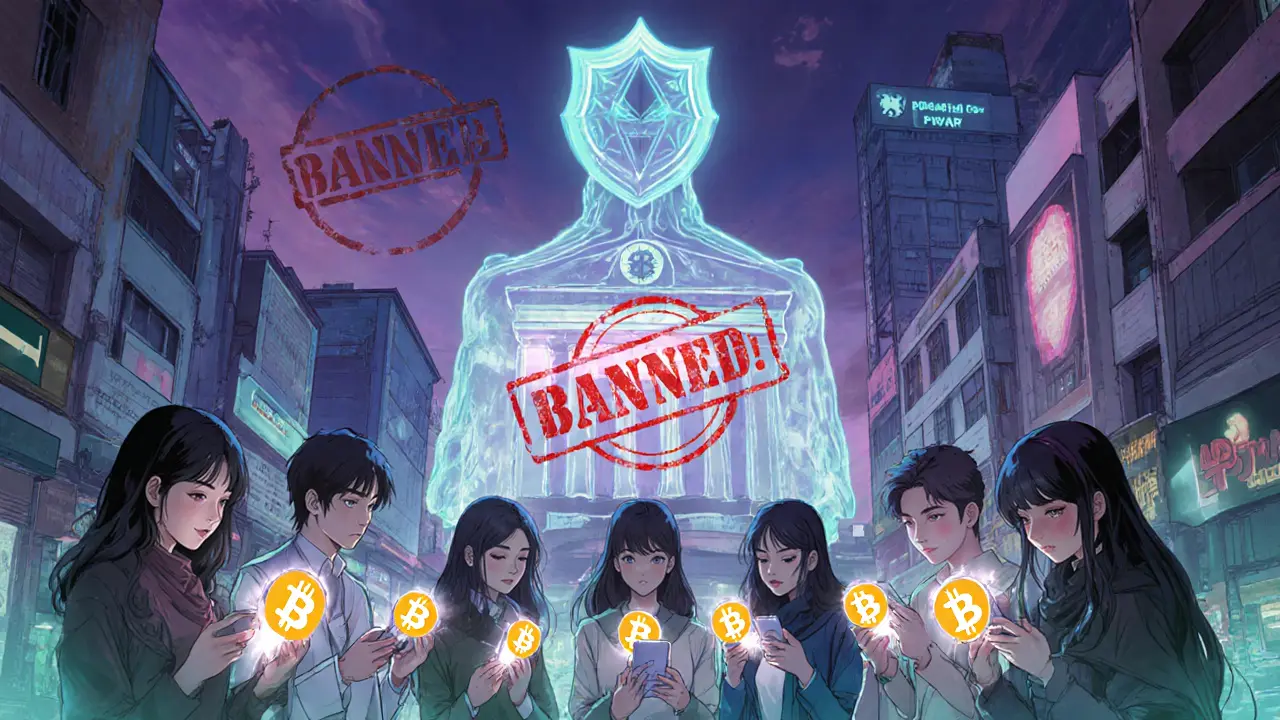
What’s Next for Crypto in Pakistan?
The government’s ambitions go beyond exchanges. At Bitcoin Vegas 2025, the Pakistan Crypto Council announced plans for a Strategic Bitcoin Reserve and 2,000 MW of electricity for Bitcoin mining. But the IMF pushed back hard. They warned that subsidized power for mining would strain the grid and cost the treasury billions in lost revenue. As of November 2025, that mining plan is on hold. Meanwhile, the Senate is moving to transfer the Crypto Council from the Ministry of Finance to the Ministry of Information Technology. Why? Because crypto isn’t a fiscal issue-it’s a tech infrastructure issue. The State Bank is also preparing a pilot for a Central Bank Digital Currency (CBDC). That’s important. It shows the government still wants digital money-but it wants to control it. The CBDC could eventually compete with or even replace private crypto, depending on how it’s designed. For now, the licensing process under PVARA is the clearest signal Pakistan is open for business. But it’s a cautious opening. Only the best, most compliant firms get in. Only those who can navigate the contradictions survive.Who Should Apply? Who Should Wait?
If you’re a well-established exchange with SEC, FCA, or MAS approval, and you’ve got the compliance team to handle the paperwork-apply now. The market is still early. First movers will get the most users. If you’re a small startup without international licensing, don’t waste your time. PVARA won’t accept you. Focus on building your credentials elsewhere first. If you’re a Pakistani user, stick with licensed platforms. Even though bank transfers are blocked, these exchanges are the safest way to trade. Avoid unregulated P2P markets unless you know the counterparty. Your funds are at risk.Key Takeaways
- PVARA is Pakistan’s only legal pathway for crypto exchanges-no exceptions.
- You must already be licensed by the SEC, FCA, VARA, MAS, or EU VASP framework to apply.
- Submit a detailed EoI PDF with corporate, financial, and compliance documents.
- Expect at least three months for review and approval.
- Banks still can’t touch crypto-this creates major operational hurdles.
- Shariah-compliant crypto is a growing niche with real potential.
- The future depends on resolving the PVARA-SBP conflict and IMF approval for mining.
Can I start a crypto exchange in Pakistan without international licensing?
No. PVARA only accepts applications from firms already licensed by recognized international regulators like the SEC, FCA, VARA, or MAS. There are no exceptions for local startups or unregulated entities.
Can I deposit Pakistani Rupees (PKR) into a licensed crypto exchange?
Not directly through banks. The State Bank of Pakistan still prohibits financial institutions from processing crypto transactions. Users must use peer-to-peer platforms, mobile wallets, or third-party payment aggregators to fund accounts-though these methods operate in a legal gray zone.
How long does the PVARA licensing process take?
At least three months from submission to license issuance. PVARA reviews applications on a rolling basis and prioritizes thorough due diligence over speed. Delays can occur if documentation is incomplete or requires clarification.
Are Bitcoin mining operations legal in Pakistan?
Not yet. While the government proposed allocating 2,000 MW of electricity for mining in mid-2025, the International Monetary Fund rejected the plan due to fiscal and energy grid risks. The proposal remains under review and is not currently approved.
Is crypto trading legal for individual users in Pakistan?
Yes, for individuals. PVARA’s licensing framework recognizes personal crypto ownership and trading as legal. However, users must use licensed exchanges and cannot rely on banks for deposits or withdrawals. There are no penalties for holding or trading crypto, but unregulated platforms carry high risk.
What happens if my EoI is rejected by PVARA?
There is no formal appeal process. If your application is rejected, you must fix the issues identified by PVARA and submit a new EoI. Many firms hire compliance consultants to avoid rejection on technical grounds.
Can Islamic finance products be offered on licensed exchanges?
Yes. PVARA has a regulatory sandbox specifically for Shariah-compliant crypto services, including halal staking, tokenized zakat platforms, and profit-sharing DeFi models. This is a major opportunity for firms targeting Pakistan’s Muslim population.
Tony spart
November 27, 2025 AT 05:53Ben Costlee
November 28, 2025 AT 14:21Mark Adelmann
November 29, 2025 AT 09:14ola frank
November 29, 2025 AT 15:48imoleayo adebiyi
November 30, 2025 AT 03:00Angel RYAN
November 30, 2025 AT 15:48stephen bullard
December 2, 2025 AT 15:31SHASHI SHEKHAR
December 2, 2025 AT 19:41Vaibhav Jaiswal
December 3, 2025 AT 10:43Abby cant tell ya
December 4, 2025 AT 03:39Janice Jose
December 5, 2025 AT 16:48Savan Prajapati
December 6, 2025 AT 18:23Michael Labelle
December 6, 2025 AT 22:56Joel Christian
December 8, 2025 AT 14:39jeff aza
December 9, 2025 AT 10:06Vijay Kumar
December 9, 2025 AT 22:52Vance Ashby
December 11, 2025 AT 13:55Brian Bernfeld
December 11, 2025 AT 18:37Ian Esche
December 12, 2025 AT 17:00Ben Costlee
December 13, 2025 AT 21:31