
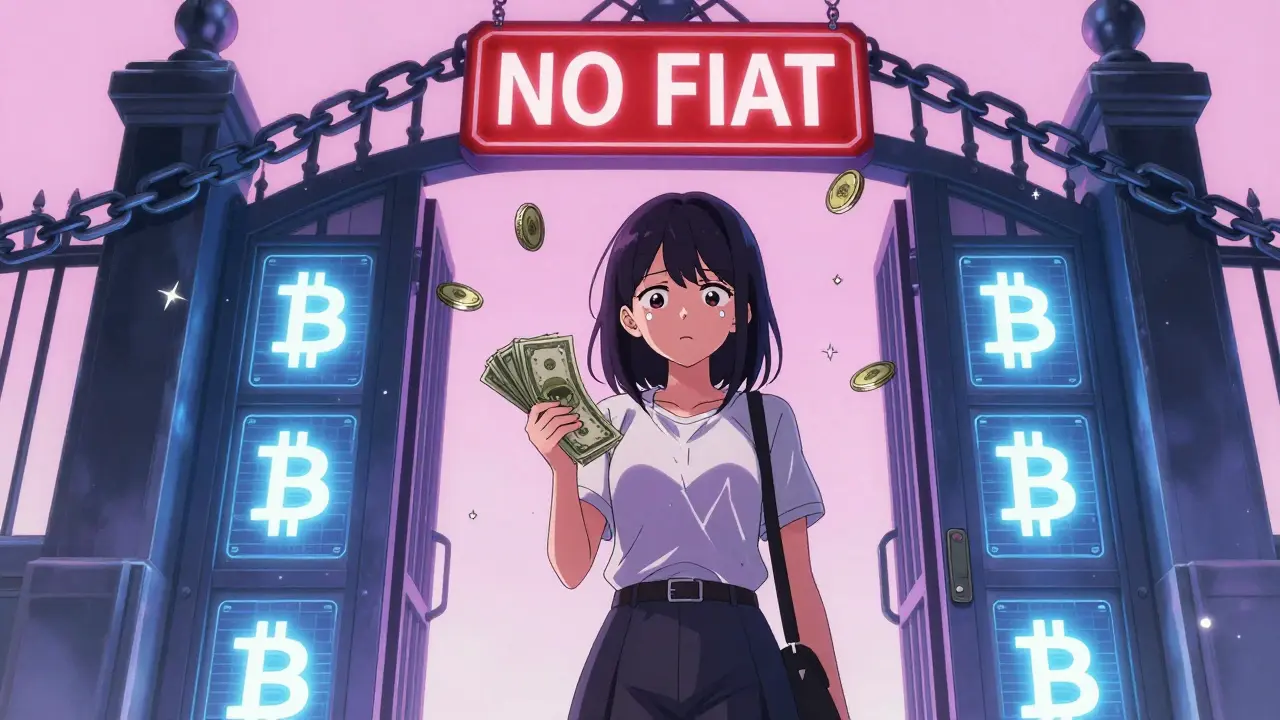
Imagine you want to buy your first Bitcoin. You find an exchange that says "Welcome!" but then hits you with a wall: "No cash deposits allowed." That is the reality of SecondBTC, a centralized cryptocurrency exchange platform based in India. Launched on June 15, 2018, during the height of the initial crypto boom, SecondBTC has remained a niche player. In 2026, when giants like Binance and Coinbase dominate the market with fiat support and deep liquidity, does this small, crypto-only platform still have a place in your portfolio?
The short answer is probably not for beginners. But if you already hold digital assets and are looking for a secondary venue to trade obscure pairs, it might warrant a closer look. Let’s break down exactly what SecondBTC offers, where it falls short, and whether your funds are safe there.
What Is SecondBTC? The Basics
SecondBTC positions itself as a straightforward crypto-to-crypto trading platform. Unlike major exchanges that act as bridges between traditional finance and the blockchain world, SecondBTC assumes you already have cryptocurrency. There is no option to deposit USD, EUR, or INR directly. You must transfer existing digital assets from another wallet or exchange to start trading.
This operational model significantly limits its accessibility. If you are new to crypto, SecondBTC is effectively useless to you because you cannot enter the ecosystem through their doors. You need an "entry-level exchange" first-somewhere that accepts bank transfers-to get your initial coins before moving them here.
The platform launched in 2018, placing it in the second wave of Indian crypto exchanges. While many peers from that era expanded globally or shut down due to regulatory pressure, SecondBTC has persisted but with minimal growth. Its headquarters remain in India, though it attempts to serve a global audience, including users from the United States.
| Feature | Details |
|---|---|
| Launch Date | June 15, 2018 |
| HQ Location | India |
| Fiat Support | No (Crypto-only) |
| Regulatory Status | Unregulated |
| US Access | Allowed (with user discretion) |
Trading Pairs and Asset Selection
One of the biggest red flags for any trader is the selection of assets. In 2026, top-tier exchanges offer hundreds, sometimes thousands, of tokens. SecondBTC offers a modest selection of just 34 cryptocurrencies.
You will find the usual suspects: Ethereum (ETH), Ripple (XRP), and Tether (USDT). These are the backbone of most portfolios. However, the lack of newer altcoins, DeFi tokens, or meme coins means you miss out on significant market opportunities. If you are looking to diversify beyond the top 10 by market cap, SecondBTC likely won’t have the pair you need.
This limited portfolio suggests the exchange has not actively expanded its listings in recent years. For a platform launched nearly eight years ago, this stagnation is concerning. Competitors add new tokens weekly to attract volume; SecondBTC seems content with its small, static list.
Fees: Simple But Not Cheap
Let’s talk about costs. SecondBTC implements a flat fee structure charging 0.20% for both market makers and takers. At first glance, this sounds standard. Empirical studies from Q3 2021 placed average exchange fees in the mid-range, so 0.20% is not outrageous.
However, context matters. Major competitors like Binance often charge as low as 0.10% or even less with token discounts. Kraken and Coinbase Pro also offer tiered structures that reward high-volume traders with lower rates. SecondBTC’s flat rate means you pay the same whether you are trading $100 or $100,000. For active traders, this adds up quickly.
More importantly, there is a lack of transparency regarding the complete fee structure. Are there hidden withdrawal fees? What are the network gas costs passed on to users? The platform does not clearly outline these details upfront. In the crypto world, ambiguity around fees is a warning sign. Always assume the worst-case scenario until proven otherwise.

Liquidity and Trading Volume
Liquidity determines how easily you can buy or sell without affecting the price. Low liquidity leads to wide spreads and slippage, eating into your profits. SecondBTC demonstrates relatively modest activity levels.
Historical data shows USD 616,644 in 24-hour volume as of November 2019. By December 2021, this figure increased to USD 1.1 million. While that is growth, it is microscopic compared to industry leaders. Binance processes billions daily. Even mid-tier exchanges handle tens of millions. A $1 million daily volume indicates a very thin order book.
If you try to execute a large trade on SecondBTC, you might move the market against yourself. For example, selling $50,000 worth of ETH could drop the price significantly because there aren’t enough buyers at higher prices. This makes the platform unsuitable for institutional investors or serious retail traders who value execution speed and tight spreads.
Furthermore, the platform lacks comprehensive data availability on major tracking platforms like CoinMarketCap. This absence suggests limited market presence and raises questions about the accuracy of their reported volumes. Unverified volume is a common tactic to appear more popular than one is.
Security and Regulatory Risks
This is the most critical section. Security in crypto is non-negotiable. SecondBTC operates without regulation from any specific financial authority. There is no mention of insurance funds, cold storage audits, or proof-of-reserves protocols that have become standard since the FTX collapse in 2022.
The platform advises US investors to conduct independent assessments of legal issues, acknowledging that state laws may prohibit trading. This is a classic disclaimer to shift liability away from the exchange. Operating unregulated means if something goes wrong-hack, insolvency, fraud-you have little to no recourse. No government agency will help you recover lost funds.
User reviews paint a bleak picture. SecondBTC holds a rating of 0 out of 5 stars on FxVerify with zero user reviews available. This isn’t just bad; it’s invisible. Either very few people use it, or those who did had such negative experiences they went elsewhere to complain. The lack of social proof is a massive risk factor.
While some users praise the fast withdrawal speeds, this is anecdotal. Speed means nothing if the platform disappears tomorrow. Without robust security measures and transparent governance, keeping funds on SecondBTC long-term is ill-advised. Use it only for immediate trades, then move your assets to a self-custody hardware wallet.
User Experience and Interface
The interface is described as user-friendly, which is good for simplicity. Registration requires standard info: full name, email, password, and email verification. Know Your Customer (KYC) procedures involve submitting identification documents, which is normal for compliance.
The trading terminal includes basic features: order books, price charts, order history, and buy/sell boxes. However, it lacks sophistication. Professional traders need advanced charting tools, API access, and customizable layouts. SecondBTC’s interface feels dated, resembling early 2018 designs rather than modern 2026 standards.
Customer support is another weak point. Limited channels mean if you face an issue, you might be stuck waiting days for a response. In crypto, time is money. Poor support can turn a minor glitch into a major loss.

Who Should Avoid SecondBTC?
- New Investors: You cannot deposit fiat currency. You need crypto first.
- High-Volume Traders: Low liquidity will cause slippage and poor execution.
- Risk-Averse Users: Lack of regulation and insurance puts your funds at risk.
- US Residents Seeking Protection: The exchange disclaims legal responsibility for US users.
Better Alternatives in 2026
Why settle for SecondBTC when better options exist? Here is how it compares to established players:
| Exchange | Fiat Support | Regulation | Avg. Fee | Best For |
|---|---|---|---|---|
| SecondBTC | No | None | 0.20% | Niche crypto-to-crypto swaps |
| Binance | Yes | Global (varies) | 0.10% | High volume, diverse assets |
| Coinbase | Yes | US Regulated | 0.40%-0.60% | Beginners, security |
| Kraken | Yes | Strong Compliance | 0.16%-0.26% | Privacy, professional trading |
Binance offers deeper liquidity and more coins. Coinbase provides superior regulatory credentials and ease of use for newcomers. Kraken balances security with professional tools. All three accept fiat deposits, removing the barrier SecondBTC creates.
Final Verdict: Proceed With Caution
SecondBTC is a relic of the 2018 crypto boom. It serves a very narrow purpose: swapping existing crypto holdings without using fiat. For most users in 2026, this is not enough. The lack of regulatory oversight, low trading volume, and limited asset selection make it a risky choice.
If you must use it, keep funds minimal. Trade quickly. Withdraw immediately to a secure wallet. Do not store long-term investments here. For anyone else, stick to regulated, high-volume exchanges that prioritize your safety and offer better fees.
Can I deposit USD or INR on SecondBTC?
No. SecondBTC is a crypto-to-crypto only exchange. You cannot deposit fiat currencies like USD, INR, or EUR. You must transfer cryptocurrency from another wallet or exchange to begin trading.
Is SecondBTC safe for US residents?
The platform allows US users but explicitly states they should assess legal risks independently. Since SecondBTC is unregulated, US residents have no federal protection if the exchange fails or engages in misconduct. State laws may also restrict trading.
How much does SecondBTC charge in fees?
SecondBTC charges a flat 0.20% fee for both makers and takers. This is higher than major competitors like Binance (0.10%) and does not decrease with volume. Hidden withdrawal fees may also apply.
Why is SecondBTC not listed on CoinMarketCap?
SecondBTC lacks comprehensive data availability on major trackers. This usually indicates low trading volume, insufficient transparency, or failure to meet listing criteria for reliable data aggregation.
Does SecondBTC offer two-factor authentication (2FA)?
Yes, the platform recommends implementing 2FA and complex passwords. However, given the lack of broader security audits and regulatory compliance, 2FA alone may not protect against platform-wide failures or hacks.