

Despite a total ban on cryptocurrency since 2017, Nepali citizens are still buying, selling, and holding Bitcoin and other digital assets - quietly, secretly, and at serious risk. The Nepal Rastra Bank (NRB) made it clear: no mining, no trading, no holding. Violators face fines, imprisonment, and asset seizures. Yet, in the back alleys of Kathmandu, in encrypted WhatsApp groups, and through hidden P2P deals, crypto trading isn’t just alive - it’s thriving.
How People Bypass the Ban
You won’t find a single legal crypto exchange in Nepal. Binance, Coinbase, Kraken - all blocked. But that hasn’t stopped traders. Instead, they’ve built their own system. The most common method? P2P trading. People connect directly with each other through apps like Binance P2P, where buyers and sellers agree on a price and settle in Nepali rupees via eSewa, IME Pay, or bank transfer. No exchange handles the money. No digital trail leads back to the platform. It’s peer-to-peer, cash-like, and hard to trace. To access these platforms, users rely on VPNs. The Nepal Telecommunication Authority (NTA) has blocked hundreds of crypto-related websites since 2021. But a good VPN costs less than $5 a month. Thousands use ExpressVPN, NordVPN, or local providers to mask their IP addresses and bypass the blocks. The government knows this. In 2025, NRB issued a new circular explicitly banning VPN use for crypto access - but enforcement is nearly impossible. How do you prove someone used a VPN? They’re everywhere, legal for work, and encrypted by design. Communication happens on Telegram and WhatsApp. Groups are small, invite-only, and constantly changing names. One trader in Pokhara told me his group has 17 members. They meet once a week to swap addresses and payment screenshots. No names. No IDs. Just crypto addresses and bank receipts. If someone gets caught, they disappear - no warning, no farewell.The Real Reason People Risk It
It’s not speculation. It’s survival. Nepal receives over $8 billion in remittances every year - mostly from workers in Malaysia, Qatar, and the UAE. Sending money through traditional channels takes days, costs 8-10%, and requires paperwork. Crypto cuts that to hours and 1-2%. A worker in Dubai sends $500 in Bitcoin. His family in Dang receives it via P2P, converts to NPR, and uses it to pay school fees or buy medicine. No bank forms. No middlemen. No delays. Young investors see crypto as their only shot at wealth. Stock markets are closed to most. Mutual funds require high minimums. Real estate is out of reach. Bitcoin, even in small amounts, feels like a lifeline. One 24-year-old from Birgunj told me he started with $20 in Bitcoin in 2022. Today, it’s worth over Rs 150,000. He doesn’t plan to cash out - he’s waiting. He knows the risk. But he also knows the alternatives are worse.
How the Government Is Fighting Back
The NRB isn’t just issuing warnings. They’re arresting people. In July 2025, the Central Investigation Bureau (CIB) raided a grocery store in Lalitpur. Behind the shelves of rice and oil, they found servers, CCTV monitors, and records of over Rs 1.5 billion in crypto transactions. Two Indian nationals were arrested - not Nepalis. They’d been running a full-scale crypto exchange disguised as a small business. The case was filed under Nepal’s Criminal Code 2074 for illegal hundi (underground money transfer) and unauthorized use of virtual currency. The government now monitors bank transactions for patterns linked to crypto. If you send Rs 50,000 to the same person every week, and they send it right back - that’s a red flag. Banks are required to report suspicious activity. The NRB works with anti-money laundering units to trace these loops. Even if you don’t use an exchange, your bank can get you. They’ve also cracked down on crypto promoters. Instagram influencers who post “Earn Bitcoin with 5000 NPR!” now risk arrest. Ads for crypto education courses are being taken down. Even mentioning Bitcoin in public forums can draw attention.The Human Cost
The fear is real. One trader in Biratnagar was arrested in 2023 after a friend betrayed him. He spent six months in jail before being released on bail. His phone, laptop, and savings were seized. He lost his job. His family still doesn’t know the full story. He doesn’t trade anymore. But he still owns a small amount of Bitcoin - locked in a hardware wallet, buried under floorboards. Another woman in Kirtipur uses crypto to send money to her daughter studying in Canada. She’s been doing it for five years. She never tells anyone. Not her husband, not her neighbors. She uses a different eSewa account for each transaction. She changes her WhatsApp number every three months. She sleeps with her phone under her pillow. The psychological toll is heavy. Traders live in constant low-grade panic. Every notification from their bank. Every strange call from an unknown number. Every time their internet cuts out - they wonder: is this it?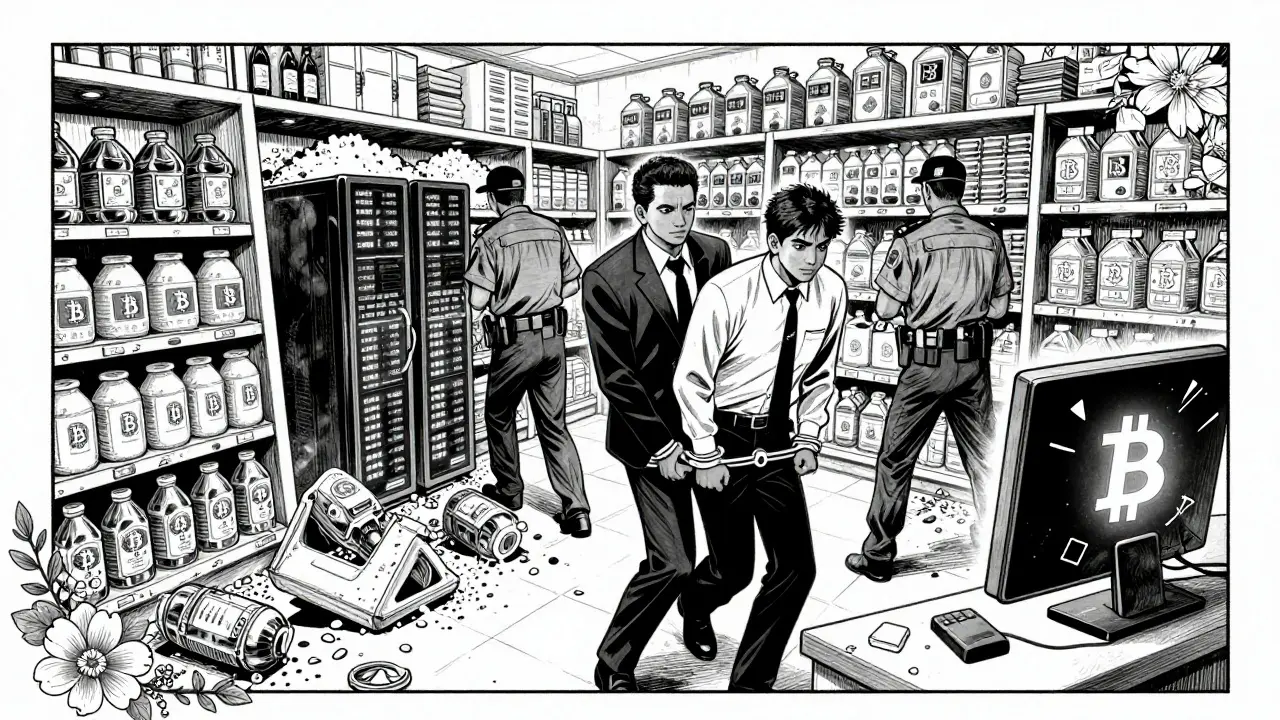
Why the Ban Won’t Work
Nepal’s ban is one of the strictest in the world. But it’s built on a flawed assumption: that banning technology stops demand. It doesn’t. It just drives it underground. India banned crypto in 2018 - then reversed it in 2020. Now, it’s building a regulatory sandbox. Bhutan is testing a national blockchain. Even Pakistan, with its own economic chaos, allows crypto trading under license. Nepal is alone in its hardline stance. The government fears loss of monetary control. They worry about capital flight. They say crypto is a tool for criminals. But the truth? Most users aren’t criminals. They’re students, workers, small business owners - people trying to survive in an economy that offers them few options. The ban has failed to stop trading. It’s only made it more dangerous.What Comes Next?
There’s no sign the government will soften its stance. The 2025 crackdowns show they’re doubling down. But enforcement is expensive. Surveillance is invasive. And the underground market keeps adapting. New methods are emerging. Some traders now use crypto ATMs hidden in private homes. Others trade via gift cards - buying Bitcoin with Amazon vouchers, then selling the vouchers locally. One group in Butwal uses QR code swaps in public parks. No phones. No apps. Just a quick scan and a handshake. The longer the ban lasts, the more sophisticated the workarounds become. And the more people get caught, the more others learn how to hide better. Legal experts say pressure will grow. As global adoption rises and neighboring countries embrace crypto, Nepal’s isolation will become harder to justify. But for now? The ban stands. And the trade goes on - in silence, in shadows, and at great personal risk.Is it legal to buy Bitcoin in Nepal?
No. The Nepal Rastra Bank banned all cryptocurrency activities in 2017. This includes buying, selling, mining, holding, or promoting crypto. Violating the ban can lead to fines, imprisonment, or asset seizure under Nepal’s Cybercrime and Foreign Exchange laws.
Can you get arrested for trading crypto in Nepal?
Yes. In 2023 and 2025, multiple individuals were arrested for running crypto exchanges, promoting crypto on social media, or facilitating P2P trades. In one 2025 case, two foreign nationals were jailed for handling over Rs 1.5 billion in illegal crypto transactions. Even using a VPN to access crypto platforms is now considered a violation.
How do people trade crypto secretly in Nepal?
Most use P2P platforms like Binance P2P, settled through eSewa or bank transfers. They hide their IP addresses with VPNs and communicate via encrypted apps like Telegram and WhatsApp. Transactions are kept small and irregular to avoid bank detection. Some use gift cards, QR code swaps, or hidden crypto ATMs in private homes.
Why is crypto so popular in Nepal despite the ban?
Nepal relies heavily on remittances from workers abroad. Crypto offers faster, cheaper transfers than traditional banks. For young people, it’s also one of the few ways to invest outside the country’s limited financial system. Many see it as a tool for survival, not speculation.
Has the government shut down any crypto operations?
Yes. In July 2025, Nepal Police raided a grocery store in Lalitpur that was secretly running a crypto exchange. They arrested two Indian nationals and seized over Rs 820,000 in cash, servers, and transaction records. The operation had moved over Rs 1.5 billion in crypto value. Similar raids have occurred since 2022 targeting crypto promoters and P2P operators.
Is using a VPN for crypto illegal in Nepal?
Yes. As of 2025, the Nepal Rastra Bank explicitly prohibits using VPNs to access foreign cryptocurrency exchanges. While VPNs are legal for other purposes, using them for crypto is now considered a criminal act under updated enforcement guidelines.
Janet Combs
December 23, 2025 AT 02:28Wow. Just... wow. I read this and my heart hurt. People sleeping with their phones under pillows just to send money to their kids? That’s not crypto-that’s desperation with Wi-Fi.
Sybille Wernheim
December 23, 2025 AT 11:14This is the most beautiful thing I’ve read all week. Real people, real struggles, real innovation. No banks, no red tape-just love moving through code. 🙌
vaibhav pushilkar
December 24, 2025 AT 02:16VPN ban? Lol. Good luck enforcing that. My cousin in Kathmandu uses a free proxy on his grandma’s Android tablet. You can’t police human need.
Dan Dellechiaie
December 25, 2025 AT 13:21Let’s be real-this isn’t about crypto. It’s about Nepal’s entire financial system being a dumpster fire. If your remittance system costs 10% and takes 5 days, of course people are gonna hack it. The real crime is the NRB’s incompetence.
Cathy Bounchareune
December 27, 2025 AT 07:14I’m from Philly, and I’ve seen underground economies thrive when institutions fail-think dollar vans, black-market pharmacies, bootlegged vinyl. This? This is the same energy. Just with QR codes and eSewa. The human spirit doesn’t care about central bank edicts. It finds a way. Always.
Sarah Glaser
December 28, 2025 AT 08:44There’s a philosophical truth here: technology cannot be outlawed-only distorted. The ban hasn’t killed crypto. It’s turned it into a ritual of survival. Every transaction is an act of quiet rebellion. And that’s more powerful than any law.
Radha Reddy
December 28, 2025 AT 20:52As an Indian, I see parallels. We had similar panic around UPI and crypto. But people adapt. The government eventually catches up-not by banning, but by regulating. Nepal needs to stop fighting the future.
Shubham Singh
December 29, 2025 AT 07:40Pathetic. People risk jail for Bitcoin? You call that ambition? In my village, we grow rice. We don’t gamble with digital ghosts while hiding behind VPNs. This is not progress-it’s delusion.
Jake Mepham
December 30, 2025 AT 21:20Did you know some traders in Pokhara now use Bluetooth file sharing to swap crypto addresses? No internet needed. Just two phones tapped together in a crowded bus. The underground is getting smarter by the day. The NRB’s chasing ghosts with a flashlight.
Craig Fraser
January 1, 2026 AT 18:07It’s amusing how Westerners romanticize this as ‘resistance.’ In reality, it’s just people using the cheapest tool available to avoid being fleeced by their own government. No heroism. Just bad policy.
Grace Simmons
January 3, 2026 AT 17:24This is a national security threat. Foreign actors are using Nepal as a laundering hub. The government must act with force, not tolerate this chaos. Crypto is a tool of the West to destabilize developing economies.
SHEFFIN ANTONY
January 4, 2026 AT 01:07Oh wow, a grocery store with servers?! That’s like saying ‘I hid my illegal moonshine in a bakery’ and then acting surprised when the cops showed up. This isn’t clever-it’s dumb. And now they’re all gonna get arrested. Good.
Vyas Koduvayur
January 4, 2026 AT 08:53Let’s analyze the macroeconomic implications: Nepal’s remittance dependency is 23% of GDP, which creates a structural vulnerability. The informal crypto ecosystem, while inefficient and risky, is a decentralized hedge against currency devaluation and capital controls. However, the absence of KYC/AML protocols introduces systemic counterparty risk, and the use of encrypted messaging platforms violates international FATF guidelines. Moreover, the psychological toll on traders-measured via cortisol levels in longitudinal studies-is comparable to chronic anxiety disorders. The ban isn’t just ineffective; it’s a public health crisis masked as fiscal policy.
Charles Freitas
January 4, 2026 AT 11:54Of course it’s thriving. People are idiots. You think Bitcoin is gonna save you? It’s a meme with a blockchain. You’re trading digital scribbles while your kid eats instant noodles. Congrats, you’re part of the greatest financial cult since tulip mania.
Sheila Ayu
January 4, 2026 AT 20:13Wait-so you’re telling me people are using QR codes in parks?!! Like… in the middle of the day?!! With strangers?!?! And no phones?!?! Are they… wizards?!?!?! I’m not even mad, I’m impressed. This is the most chaotic, beautiful thing I’ve ever heard.
Brian Martitsch
January 5, 2026 AT 16:47LOL. Ban crypto? 😂 Nepal’s got more problems than Bitcoin. Fix the power grid first. Then talk.