

Have you ever wondered why some crypto projects promise to revolutionize an entire industry but barely make a ripple in the market? That’s exactly where MiraclePlay (MPT) sits right now. It’s a cryptocurrency designed for online esports tournaments, built on the Ethereum blockchain. On paper, it sounds like a dream: fair play, automated payouts, and no middlemen taking a cut. In reality, it’s a small-cap token struggling with low liquidity and limited adoption.
If you’re looking at MPT because you saw it mentioned in a forum or noticed its low price tag, you need to know what you’re actually buying. This isn’t just about the tech; it’s about whether there are enough people using the platform to keep the token alive. Let’s break down what MiraclePlay is, how it works, and whether it has any real staying power in today’s crowded crypto landscape.
The Core Idea: Blockchain Meets Esports
At its heart, MiraclePlay is a utility token that powers a decentralized esports tournament platform. The problem it tries to solve is simple but persistent: traditional online gaming tournaments are often opaque. Who decides the winner? When do you get paid? Is the matchmaking rigged? Traditional platforms rely on centralized servers and manual oversight, which can lead to disputes and delays.
MiraclePlay uses smart contracts to automate these processes. Think of it as a referee that lives on the blockchain. Once a tournament starts, the rules are coded into the contract. If you win, the prize money is released automatically. There’s no human admin who can change their mind or delay your payment. This transparency is the main selling point for gamers who have been burned by shady tournament organizers before.
The project launched around 2021, aiming to create an ecosystem where game developers, sponsors, and players interact directly. Instead of paying fees to a central company, users pay transaction fees in MPT tokens. This creates demand for the token within the platform itself-if the platform grows, the demand for MPT should theoretically grow too.
Technical Specs and Tokenomics
To understand if MPT is worth your attention, you have to look under the hood. Here are the hard numbers that define the token:
- Blockchain: Ethereum (ERC-20 standard)
- Contract Address: 0x2237C1299473b80C5F482E4974D8A0eCc318f775
- Total Supply: 3,000,000,000 MPT (fixed supply)
- Circulating Supply: Approximately 1.04 billion to 1.1 billion MPT
- Market Cap: Historically hovering between $6.7 million and $7.1 million USD (as of late 2023 data points)
The fact that only about one-third of the total supply is in circulation is interesting. It means there are still billions of tokens locked up, likely held by the team, investors, or reserved for future development. For investors, this raises a question: when will those remaining tokens hit the market? If they are released all at once, it could flood the market and drive the price down further. This is a common risk with many early-stage crypto projects.
MiraclePlay also claims to support multi-chain integration, though most activity remains on Ethereum. This is crucial because Ethereum gas fees can be high. If the platform wants to attract casual gamers, it needs to operate on cheaper networks like Polygon or BNB Chain to keep transaction costs low. Without that, hosting a $10 tournament might cost more in gas fees than the prize itself.
Price History and Market Reality
Let’s talk about the elephant in the room: the price. Like many gaming tokens, MPT has seen a rough ride. It reached an all-time high of roughly $0.138 back in March 2024 (according to some data aggregators, though dates vary by source). Since then, it has faced significant downward pressure.
| Metric | Value |
|---|---|
| All-Time High (ATH) | $0.1384 |
| All-Time Low (ATL) | $0.0039 |
| Current Range (Historical Context) | $0.006 - $0.011 |
| 1-Year Return | -76.85% |
A drop of nearly 87% from its peak is steep. But here’s the thing: the broader crypto market also took a hit during this period. The difference is that major coins like Bitcoin or Ethereum recovered faster. MPT, being a small-cap token, lacks the deep liquidity pools that allow big players to buy in without spiking the price.
You’ll find MPT traded primarily against USDT on exchanges like Deepcoin, Gate.io, BingX, and GoPax. Noticeably absent? The giants like Binance or Coinbase. Without listings on major exchanges, getting in and out of a position can be tricky. You might find yourself wanting to sell, only to realize there aren’t enough buyers on the order book to absorb your trade without crashing the price slightly.
Liquidity: The Silent Killer
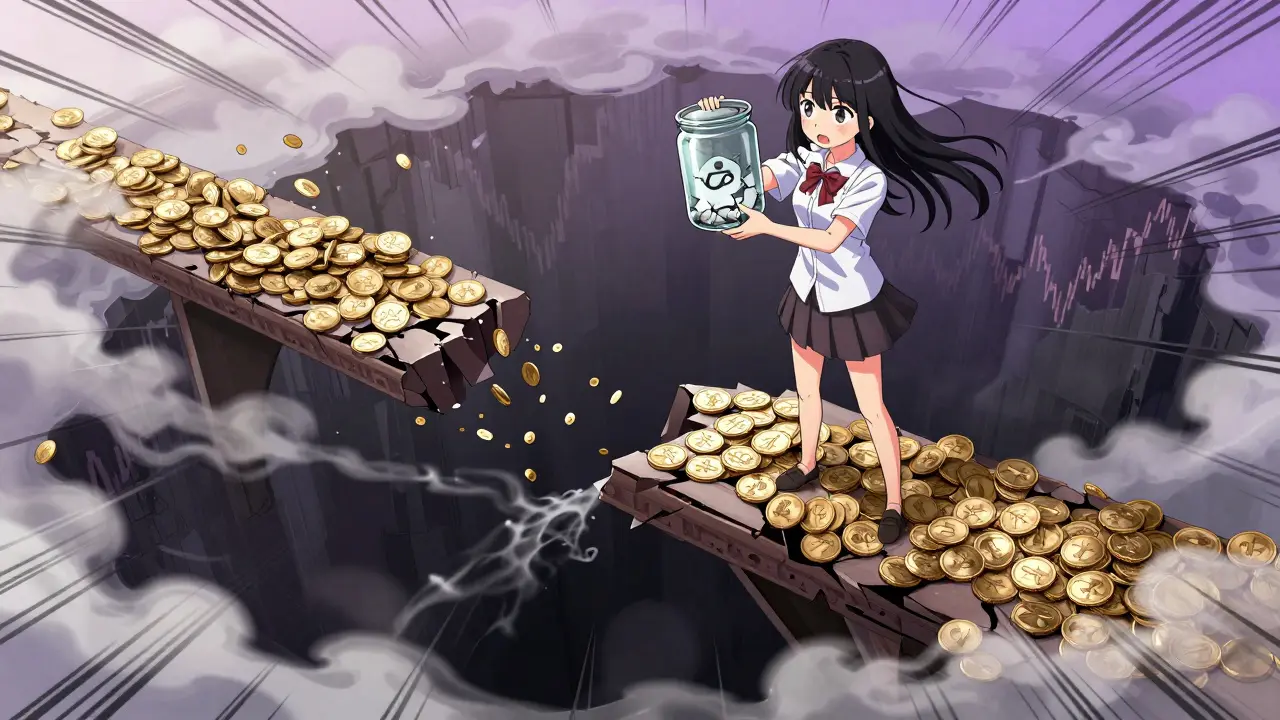
This is where most new investors stumble. They see a cheap coin-say, $0.006-and think, “If this goes to $0.06, I’m ten times richer!” That math works in theory. In practice, liquidity is king.
MiraclePlay has relatively low trading volume. When volume is low, spreads widen. This means the difference between the highest price a buyer is willing to pay and the lowest price a seller is willing to accept is larger. If you try to move more than a few thousand dollars worth of MPT, you’ll experience slippage. Your sell order might execute at a much lower price than you expected because there simply aren’t enough buy orders waiting.
For a daily trader, this is a nightmare. For a long-term holder who doesn’t plan to sell anytime soon, it matters less-but it still affects the stability of the asset. Low liquidity makes the token vulnerable to manipulation. A single large whale selling can tank the price overnight, while a single large buy can pump it artificially. This volatility isn’t driven by news or product updates; it’s driven by thin markets.
How Does It Compare to Competitors?
MiraclePlay isn’t alone in trying to merge crypto with gaming. To understand its position, we have to compare it to established players.
| Token | Primary Focus | Market Cap (Approx.) | Exchange Listings |
|---|---|---|---|
| MiraclePlay (MPT) | Esports Tournaments | ~$7 Million | Gate.io, Deepcoin, BingX |
| Immutable X (IMX) | NFT Gaming Infrastructure | ~$480 Million | Binance, Coinbase, Kraken |
| Gala (GALA) | Gaming & Entertainment Ecosystem | ~$1.1 Billion | Binance, Coinbase, Kraken |
Look at the gap. Immutable X and Gala have hundreds of millions or even billions in market cap. They are listed on every major exchange. They have massive marketing budgets and partnerships with top-tier game studios. MiraclePlay is operating in a different league entirely. It’s a niche player targeting a specific subset of gamers: those interested in competitive tournaments rather than playing AAA games or collecting NFTs.
Is that bad? Not necessarily. Niche markets can be profitable. But it means MPT cannot compete on scale. It has to compete on utility. Does the platform actually work better than existing non-crypto tournament sites? Do players prefer the friction of crypto transactions over the ease of PayPal or credit cards? These are the questions that determine MPT’s survival.

Community Sentiment vs. Fundamental Data
Here’s a strange contradiction in the MPT story. On one hand, fundamental metrics are weak. Low volume, declining price, limited exchange presence. On the other hand, community sentiment is surprisingly bullish. Data from RootData showed 96% positive votes from thousands of users in late 2023. Reddit threads are filled with speculation about potential 10x gains if MPT gets listed on a major exchange.
Why the disconnect? Often, it comes down to hope versus reality. Small communities tend to rally together because they have no other choice. If they admit the project is failing, their investment becomes worthless. So, they stay optimistic, sharing hype and ignoring red flags. Meanwhile, professional analysts look at the same data and see a token with existential challenges.
One key factor missing is strong institutional backing. While MPT participated in several launchpads like Buidlpad and Echo, it lacks the deep-pocketed venture capital firms that back projects like Illuvium. Without that financial cushion, the team has less runway to develop features, market the platform, and survive bear markets.
Risks You Need to Know Before Buying
If you’re considering adding MPT to your portfolio, treat it as a high-risk speculative bet, not a stable investment. Here are the specific risks:
- Liquidity Risk: As mentioned, you might not be able to sell large amounts quickly without impacting the price significantly.
- Adoption Risk: The platform needs active users. If gamers don’t use the site to host tournaments, the token has no utility, regardless of how good the code is.
- Regulatory Risk: Crypto regulations are tightening globally. If regulators decide that tournament prizes constitute securities, projects like MiraclePlay could face legal hurdles.
- Competition Risk: Traditional esports platforms are improving. If they add better transparency tools without requiring crypto wallets, they could steal MPT’s value proposition.
Also, check the official channels. One consistent complaint from users is the lack of clear, up-to-date documentation and active support channels like Discord or Telegram. In crypto, communication is everything. Silence from a development team is usually a bad sign.
Final Thoughts: Is MiraclePlay Worth It?
MiraclePlay represents a genuine attempt to fix real problems in esports. The idea of transparent, automated tournaments is sound. However, technology alone doesn’t build a successful business. You need users, liquidity, and trust. Currently, MPT struggles with all three.
If you believe in the long-term vision of decentralized gaming and are willing to take on high risk for potentially high rewards, MPT might fit your strategy. But do your homework. Don’t invest money you can’t afford to lose. And remember: a low price per coin does not mean it’s “cheap.” It means the market has valued the total project at a low level for a reason. Look at the fundamentals, not just the number after the decimal point.
Where can I buy MiraclePlay (MPT) tokens?
You can currently buy MPT on mid-tier cryptocurrency exchanges such as Gate.io, Deepcoin, BingX, and GoPax. It is not available on major platforms like Binance or Coinbase. Make sure to connect a compatible Ethereum wallet (like MetaMask) to store your tokens securely after purchase.
What is the total supply of MPT?
The total supply of MiraclePlay is fixed at 3,000,000,000 (3 billion) tokens. However, only about 1.04 to 1.1 billion tokens are currently in circulation. The rest are likely locked for team allocations, future development, or investor vesting schedules.
Is MiraclePlay a safe investment?
No cryptocurrency is guaranteed safe, but MPT carries higher-than-average risk due to its low market capitalization, limited liquidity, and lack of major exchange listings. It is considered a high-risk, speculative asset suitable only for investors who understand the volatility of small-cap gaming tokens.
How does MiraclePlay generate revenue?
MiraclePlay generates revenue through transaction fees paid in MPT tokens when users host or participate in tournaments. These fees cover network costs and platform maintenance. The sustainability of this model depends entirely on user adoption and tournament frequency.
Why is the price of MPT so volatile?
MPT’s price is volatile primarily due to low trading volume and shallow liquidity. With fewer buyers and sellers on the order books, even small trades can cause significant price swings. Additionally, as a small-cap token, it is more susceptible to market sentiment shifts and speculative trading compared to larger, more established cryptocurrencies.
Jay Sharma
June 30, 2026 AT 00:35you really think this is just a failed startup? nah. the whole esports blockchain thing is a front for laundering money through fake tournaments. they create shell accounts, play against each other, and move value around without triggering traditional banking alerts. its all rigged from the start.
Abby Martin
July 1, 2026 AT 05:58Let me save you all some time because clearly nobody here understands basic market dynamics. This token is worthless because it lacks fundamental utility. The community is just a bunch of degens hoping for a miracle that isn't coming. Stop buying shitcoins and learn how to read a balance sheet. It's embarrassing to watch people throw money at projects with zero adoption just because the price ends in zeros.
Maurice Flynn
July 2, 2026 AT 00:02I guess we're just waiting for the next big thing then. Sometimes the quiet ones surprise you. But yeah, liquidity is tight so probably best to just watch from the sidelines and see if they actually build something useful or if it's another vaporware project that fades into obscurity.
nancy jarecki
July 3, 2026 AT 20:00The tokenomics are fundamentally flawed due to the vesting schedule which creates a massive overhang on the circulating supply. Any rational actor would recognize the asymmetric risk profile here. The lack of institutional interest speaks volumes about the project's viability in the current macroeconomic environment. It is essentially a speculative vehicle with no underlying cash flow generation mechanism.
Robert Hundley
July 5, 2026 AT 18:07Hey everyone! Don't let the haters get you down :) Crypto is wild but there's always a chance for underdogs to shine. Keep your heads up and do your own research! You never know when the tide might turn :D
Melissa L
July 7, 2026 AT 03:51i dont get why ppl hate on it so much. sure its small but i like the idea of fair games. maybe it will grow slowley. not trying to be smart just saying my piece. hope they fix the gas fees tho cause thats annoying as hell.
Rob Morton
July 8, 2026 AT 01:17It is interesting to consider the philosophical implications of decentralized arbitration in gaming. If trust can be removed from the equation entirely, does that change the nature of competition itself? Perhaps the low adoption is simply a lag in cultural acceptance rather than a failure of technology. We should observe how these systems evolve before dismissing them outright.
Routh Middaugh
July 8, 2026 AT 11:23Look,, I don't mean to stir up trouble,,, but I think we're missing the point here!!! The potential is there,,, even if the execution is lacking right now!!! Let's keep an open mind,,, okay??? Maybe they need more time to find their footing,,,, who knows?!?
Scott Miller
July 9, 2026 AT 00:44Wake up people! This is the future of gaming! Stop listening to the FUD and start believing in the vision! Every great project started small! Get in now while it's cheap or regret it later! Don't be a loser who waits for confirmation! Be bold! Be aggressive! Make money!
Carl Belgrave
July 9, 2026 AT 07:05This is exactly what happens when you let foreign tech companies run our entertainment industry. We need American platforms built by Americans for Americans. These crypto scams are draining wealth out of the country. Support local businesses and stop funding offshore ventures that have no loyalty to our economy.
Daniel J. Cox
July 10, 2026 AT 02:15In my experience living between different gaming communities, the culture around tournaments varies wildly. Some regions embrace crypto payments readily while others stick to fiat. It's fascinating to see how MiraclePlay tries to bridge this gap. Hope they succeed in creating a global standard :)
Emma Rémond
July 10, 2026 AT 06:05The sheer incompetence displayed by the development team is staggering. To think anyone would invest in such a rudimentary platform is laughable. The technical debt alone is insurmountable. They are playing checkers while the rest of us are playing chess. It is truly pathetic to witness this level of amateurism in a space that demands precision and sophistication.
ELNORA JEFFERSON
July 11, 2026 AT 00:03Ugh why do I even bother reading these posts. Everyone is so negative or so blindly optimistic. It's exhausting. Just leave me alone with my coffee. This whole crypto thing is a waste of time anyway. Whatever.
Carol @minaszilda
July 11, 2026 AT 05:38Remember to take care of yourself during volatile times. Small steps matter. Trust your intuition. You are capable of making wise decisions. Stay grounded. Breathe. Focus on what you can control.
John Curry
July 13, 2026 AT 02:25Oh, the tragedy of it all! A dream shattered by the cold hard reality of market forces! One can almost hear the weeping of the early adopters as they watch their portfolios evaporate into thin air! How cruel fate can be to those who dare to hope in the digital age!
Fiona Ellis
July 13, 2026 AT 20:42So, I was looking at your wallet address earlier (just kidding 😜) but seriously, have you checked the recent transaction history? It’s quite revealing 📉📈 Also, did you know that most of the holders are dormant? That’s a red flag 🚩 Don’t say I didn’t warn you! 💅✨
Nicole Woessner
July 14, 2026 AT 01:40i think its cool how different cultures approach gaming. in some places tournaments are huge social events. maybe mpt can tap into that energy. seems like a niche but passionate crowd. lets see where it goes
Jon Milton
July 14, 2026 AT 04:38Listen, I've been in this game for years and I tell you what, diversity of opinion is key. Whether you love it or hate it, the technology is evolving. Let's keep the conversation respectful and open-minded. We can disagree without being disagreeable. Peace and love to all traders out there.
Sajjad Ghorbani Moghaddam
July 15, 2026 AT 13:51If you're new to this, just remember that learning is a journey. Don't feel pressured to jump in immediately. Take your time to understand the mechanics. There's plenty of resources available online. Feel free to ask questions if you're stuck. We're all here to help each other grow.
Rebecca Shoniker
July 16, 2026 AT 04:21The volatility index is spiking;;; indicating extreme instability!!! Furthermore;;; the order book depth is critically shallow;;; which exacerbates the slippage issue!!! It is imperative that retail investors recognize the predatory nature of such illiquid markets!!! Do not fall victim to manipulation!!!