
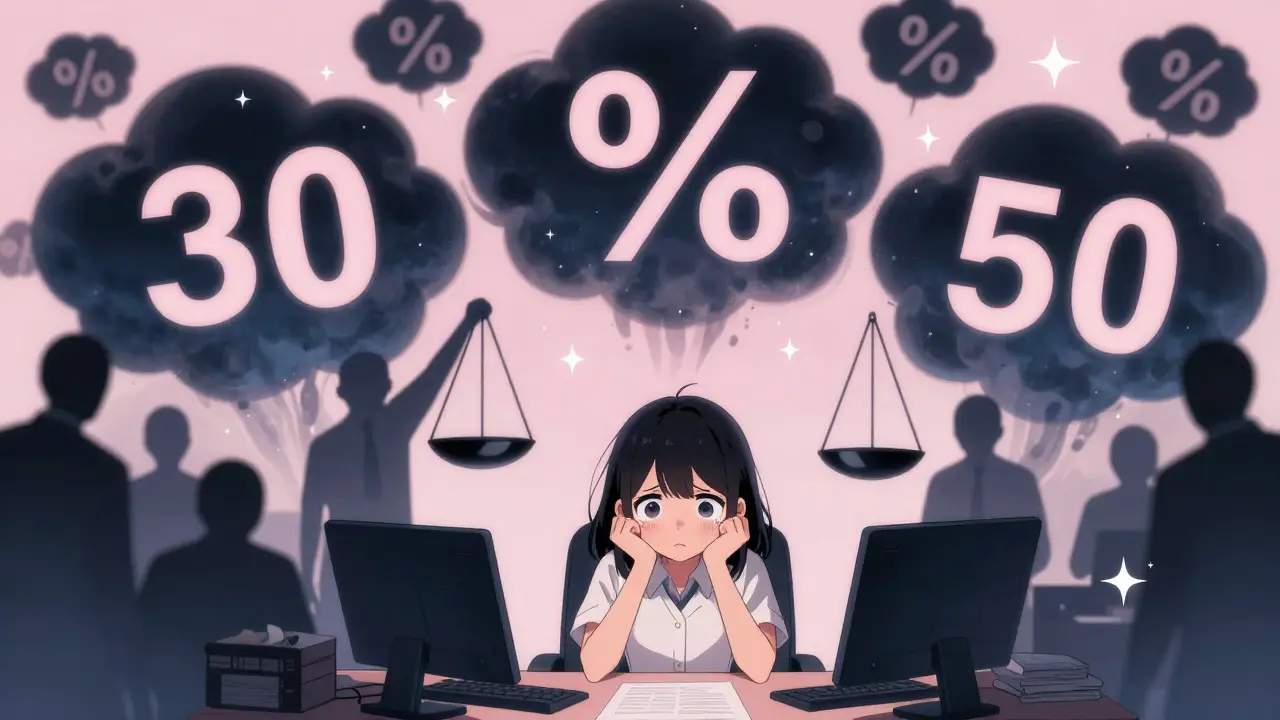
You spend hours editing a video, writing an article, or designing art. You upload it to a platform, and suddenly, you realize that platform owns your audience, controls your payout schedule, and takes a massive cut of your earnings. If this sounds familiar, you are part of the traditional creator economy-a system where creators build value for platforms while fighting for scraps of revenue.
But there is a new way to do things. It’s called the blockchain creator economy, which is a decentralized ecosystem that uses blockchain technology to give creators true ownership of their digital assets and direct access to their fans without corporate intermediaries. This isn’t just a buzzword; it is a fundamental shift in how digital value is created, distributed, and owned. By moving from centralized apps to open protocols, creators can keep up to 99% of their earnings instead of giving away half or more to middlemen.
The Core Problem with Traditional Platforms
To understand why the blockchain creator economy matters, you first need to look at the math of the old model. On platforms like YouTube, Instagram, or X (formerly Twitter), the business model relies on ads and data. The platform owns the relationship between you and your audience. They decide when you get paid, how much you get paid, and whether your account survives tomorrow’s algorithm update.
Consider the take rates. Traditional social media platforms often retain 30% to 50% of ad revenue. In some cases, like subscription models on certain networks, they capture nearly 100% of the transaction value before passing a fraction back to the creator. You are essentially working for free while building someone else’s asset. If the platform bans you, you lose everything-your audience, your history, and your income stream-instantly.
The blockchain creator economy flips this script. Instead of renting space on a company’s server, you publish your work on a decentralized ledger. Your content lives on the blockchain, not on a private database. This means no single company can delete your work or freeze your funds. You own the distribution channel, not just the content.
How the Blockchain Creator Economy Works
This system runs on three main technologies: cryptocurrency wallets, smart contracts, and non-fungible tokens (NFTs). Let’s break down what each one does for you as a creator.
- Cryptocurrency Wallets: Think of your wallet as your bank account, but one that you control entirely. It holds your crypto payments and connects you to various decentralized applications (dApps). Unlike a PayPal or Stripe account, no company can freeze your wallet. You have the keys, so you have the power.
- Smart Contracts: These are self-executing agreements written in code. When a fan buys your content or tips you, the smart contract automatically sends the money to your wallet. There is no accounting department, no monthly invoice cycle, and no hidden fees deducted by a middleman. The terms are set once and enforced forever by the network.
- NFTs (Non-Fungible Tokens): An NFT is a digital certificate of ownership. When you mint your artwork, music track, or exclusive newsletter as an NFT, you create a unique token on the blockchain. This proves who created it and who owns it. More importantly, it allows you to program royalties into the token itself.
Here is where it gets powerful. With traditional digital files, if I buy your JPEG online, I can copy it and sell it again. You get nothing. With an NFT, every time that token changes hands on a secondary market, the smart contract automatically sends a percentage of the sale price back to your wallet. You earn passive income from the resale of your work indefinitely.
Why Creators Are Making the Switch
The benefits go beyond just keeping more money. The blockchain creator economy solves structural problems that have plagued digital artists, writers, and musicians for years.
| Feature | Traditional Platforms (YouTube, Instagram) | Blockchain Platforms (Web3) |
|---|---|---|
| Platform Take Rate | 30% - 50% (or higher) | 1% - 2.5% |
| Ownership | Platform controls distribution and data | Creator owns assets and audience relationships |
| Royalties | None on secondary sales | Automated via smart contracts (e.g., 5-10%) |
| Payout Speed | 30-60 days (monthly cycles) | Near-instantaneous (blockchain confirmation time) |
| Global Access | Limited by banking infrastructure | Available anywhere with internet access |
One of the biggest advantages is financial inclusion. For creators in regions with unstable banking systems or high remittance fees, blockchain is a lifeline. Using stablecoins-cryptocurrencies pegged to the US dollar like USDC-you can receive payments instantly without worrying about currency devaluation or bank holidays. A musician in Nigeria or a writer in Argentina can get paid the same day a fan in New York buys their work, with minimal transaction costs.
Furthermore, the barrier to entry is lower than you might think. You don’t need a business license or a complex tax setup to start accepting crypto. All you need is a smartphone and an internet connection. This democratizes opportunity, allowing talented individuals who were previously excluded from the global economy to participate fully.
Getting Started: A Practical Guide
If you want to join the blockchain creator economy, here is how you begin. It feels technical at first, but the tools are becoming user-friendly every month.
- Set Up a Crypto Wallet: Download a reputable wallet app like MetaMask or Phantom. This will be your identity and bank account in the Web3 world. Secure your seed phrase (the list of words generated during setup) offline. Never share it with anyone.
- Choose a Platform: Not all blockchain platforms are the same. Some focus on art (like SuperRare), others on social networking (like Farcaster or Lens Protocol), and others on general content (like Mirror for writing). Pick one that aligns with your niche.
- Fund Your Wallet: Buy a small amount of cryptocurrency (ETH, SOL, etc.) from an exchange and send it to your wallet. You will need this to pay for "gas fees"-the small transaction costs required to process actions on the blockchain.
- Mint Your First Content: Upload your work to the platform and mint it as an NFT. This costs a few dollars in gas fees. Set your royalty percentage (usually 5-10%).
- Engage Your Audience: Share your links on traditional social media to drive traffic to your decentralized profile. Educate your fans on why buying directly from you supports you more than liking a post.
Expect a learning curve. About 68% of new creators report difficulty setting up their first wallet. Don’t let that stop you. Join Discord communities dedicated to these platforms. Most major Web3 projects have active support channels where experienced users help newcomers navigate the tech.
Challenges and Realities
It’s important to be realistic. The blockchain creator economy is not a magic bullet. It comes with challenges that you must manage.
Volatility: Cryptocurrency prices can swing wildly. If you price your work in Ethereum and its value drops 20% overnight, your income effectively shrinks. To mitigate this, many creators now accept stablecoins (USDC, DAI) which maintain a steady $1.00 value. Over 87% of major blockchain creator platforms now support stablecoin payments, making this a viable option for most.
User Experience: While improving, Web3 interfaces are still clunkier than Instagram or TikTok. Asking a fan to connect a wallet and sign a transaction is a friction point. You may lose some casual buyers who aren’t willing to learn the steps. However, this gap is closing rapidly as wallets become invisible and seamless.
Regulatory Uncertainty: Laws around crypto vary by country. The European Union has implemented the MiCA framework, providing clear guidelines. The US landscape remains fragmented. Always check local regulations regarding taxes on crypto income. In many jurisdictions, receiving crypto is a taxable event.
The Future: AI and Blockchain Convergence
Looking ahead, the most exciting development is the merger of artificial intelligence and blockchain. As of 2025, over 63% of major blockchain creator platforms have integrated AI tools. This doesn’t mean AI replaces creators; it means AI helps them scale.
Imagine using AI to generate variations of your art, then using blockchain to verify which version is the original and managing royalties for each derivative automatically. Or using AI to analyze fan behavior and smart contracts to dynamically adjust pricing based on demand. These hybrid models are creating new revenue streams that didn’t exist five years ago.
Analysts project that blockchain platforms will capture 18-22% of the overall creator economy market share by 2028. This growth is driven by creators tired of being treated as disposable labor on centralized platforms. The trend is clear: ownership is shifting back to the people who make the content.
Is the blockchain creator economy safe for beginners?
Yes, but you must prioritize security. The technology itself is secure, but human error is the biggest risk. Never share your private key or seed phrase. Use reputable wallets and platforms. Start with small amounts until you feel comfortable with the process. Scams exist, so always verify URLs and community channels.
Do I need to know coding to use blockchain creator platforms?
No. Modern platforms like Mirror, Zora, and Foundation are designed for non-technical users. You interact through graphical interfaces similar to traditional websites. The smart contracts run in the background, handling the complex logic so you can focus on creating content.
How do I get paid in real-world currency?
You can convert your crypto earnings to fiat currency (USD, EUR, etc.) using cryptocurrency exchanges like Coinbase or Kraken. Once converted, you can withdraw the funds to your traditional bank account. Some platforms also offer direct fiat payouts, but converting yourself gives you more control and often better rates.
What are gas fees, and can I avoid them?
Gas fees are transaction costs paid to the network validators. They vary based on network congestion. You cannot completely avoid them, but you can minimize them by choosing blockchains with low fees (like Polygon, Solana, or Base) instead of Ethereum mainnet. Many platforms also allow fans to pay gas fees on your behalf.
Will my NFTs lose value?
Like any asset, NFT values fluctuate based on demand. However, in the creator economy, the primary value is not speculation but utility and support. Fans buy NFTs to support you and gain access to exclusive content. Focus on building a loyal community rather than chasing short-term price spikes.
Linda Hilliard
July 13, 2026 AT 16:10Let’s be intellectually honest for a moment, shall we? The notion that blockchain is the panacea for the 'creator economy' is a simplistic reduction of complex socio-economic dynamics. While the decentralization narrative is seductive to the tech-adjacent proletariat, it ignores the liquidity crises and high barrier-to-entry inherent in Web3 ecosystems. Most creators lack the technical literacy to manage private keys, let alone navigate the volatile exchange rates of crypto assets. It is not liberation; it is merely shifting the exploitation from platform algorithms to market volatility. :)
Tawny Holmes
July 15, 2026 AT 12:09The math doesn't lie. Centralized platforms are parasitic by design. Blockchain fixes ownership.
Jessie Smith
July 15, 2026 AT 22:42I feel like yall are missing the deeper existential crisis here. We are trading one master for another. The algorithm was invisible, but now we have the cold, unfeeling code of the smart contract. Is it freedom if you still have to dance for coins? I think about this often when i stare at my wallet balance dropping due to gas fees. It feels hollow. Like selling pieces of your soul for digital tokens that might be worthless next week. The pretension of 'ownership' is just a marketing gimmick for early adopters who want to feel superior to their instagram-scrolling peers. We are all just content farms feeding the beast, whether it's Meta or Ethereum. There is no escape from the commodification of the self.
Kristine Lawson
July 17, 2026 AT 11:54It is imperative to note, however, that the regulatory landscape remains fraught with ambiguity. To suggest that creators can simply bypass traditional banking infrastructure without considering the tax implications is reckless advice. One must adhere to the established legal frameworks of their respective jurisdictions. Furthermore, the assertion that NFTs provide true scarcity is logically flawed; one can always screenshot an image. The value proposition relies entirely on social consensus, which is notoriously fickle and prone to collapse under speculative pressure. Therefore, caution is advised.
Andrew Schneider
July 18, 2026 AT 18:07Oh, please! 🙄 You guys are acting like blockchain is some new revolutionary concept. It's just a database with extra steps and way more electricity usage. The whole 'fair monetization' angle is laughable because the only people making money are the devs and the whales dumping on retail. I've seen too many artists get burned trying to mint their work, only to realize they paid $50 in gas fees to sell a jpeg for $5. It's a scam wrapped in jargon. 📉🔥
Drew M
July 20, 2026 AT 11:56I actually tried setting up a wallet last month, and honestly? It was a bit of a nightmare 😅 But once I got the hang of it, there is something incredibly satisfying about owning your audience data. No more algorithm shadow-banning! I love the idea of direct patronage. It feels more personal, don't you think? Like building a real community rather than shouting into the void of TikTok. 🌟✨
Eric Braddock
July 21, 2026 AT 06:40Wake up sheeple! This is exactly what the central bankers want you to believe. They are pushing stablecoins to normalize surveillance capitalism. Every transaction is tracked, every move monitored. You think you're free because you hold a key? Ha! The metadata is stored on IPFS, which is controlled by gatekeepers. The entire system is designed to harvest your biometric data through the camera permissions required by these dApps. Do not fall for the propaganda. Keep your cash under the mattress. That is the only true freedom left in this dystopian hellscape. 👁️🗨️
Ella Collinson
July 21, 2026 AT 13:07The structural inefficiencies of the current creator economy are glaringly obvious. By leveraging decentralized identity protocols and zero-knowledge proofs, we can theoretically create a privacy-preserving monetization layer that eliminates the need for third-party intermediaries. However, the current UX friction remains a significant bottleneck for mass adoption. Until we see seamless account abstraction implementations, the majority of users will remain trapped in walled gardens. The potential for disintermediation is high, but the execution risk is currently prohibitive for non-technical stakeholders.
Ray Arney
July 21, 2026 AT 14:13I guess it makes sense. I'm not super technical, but losing half my earnings to YouTube does sting. If I could just get paid directly, that would be nice. Seems complicated though.
Winston Lacewing
July 22, 2026 AT 12:36This article is completely ignoring the moral decay associated with crypto culture! 🤬 Think about the environmental impact! The energy consumption of proof-of-work chains is devastating our planet. And yet, here we are, celebrating greed and speculation as 'innovation.' It makes me sick to my stomach. How can you justify supporting a system built on such unethical foundations? We should be boycotting these platforms, not embracing them. The human cost is too high. 😡💔
Nick Wengel
July 23, 2026 AT 22:25In my country, internet access is spotty and banks are unreliable. For me, being able to receive payments via USDC is a lifesaver. I don't care about the hype or the jargon. I just want to eat. If this technology helps me survive, then I am grateful. It opens doors that were previously locked shut by colonial banking structures. Simple as that.
Nick G
July 25, 2026 AT 10:30One must consider the cultural nuances of digital ownership across different global contexts. In many parts of the world, the concept of intellectual property is viewed differently than in the West. Blockchain imposes a rigid, Western-centric framework of individual ownership onto communities that may value collective creation. While the financial inclusion aspect is undeniable and beneficial for those in unstable economies, we must tread carefully to ensure we are not inadvertently eroding communal artistic traditions in favor of hyper-individualistic tokenization models. It is a delicate balance between empowerment and cultural imperialism.
Alicia Hull
July 26, 2026 AT 00:49You claim that smart contracts enforce terms forever, but what happens when the law changes? What happens when a court orders the freeze of assets? Code is not law; it is just code. I demand to know how you plan to protect creators from legal injunctions that override blockchain immutability. This is a critical flaw in your argument. Explain yourself.
Johan Otto
July 26, 2026 AT 05:13Bro, why so serious? 😂 Just use it if it works. If it breaks, you learn. Life is short. Don't overthink the philosophy. Just mint and burn. 🔥