
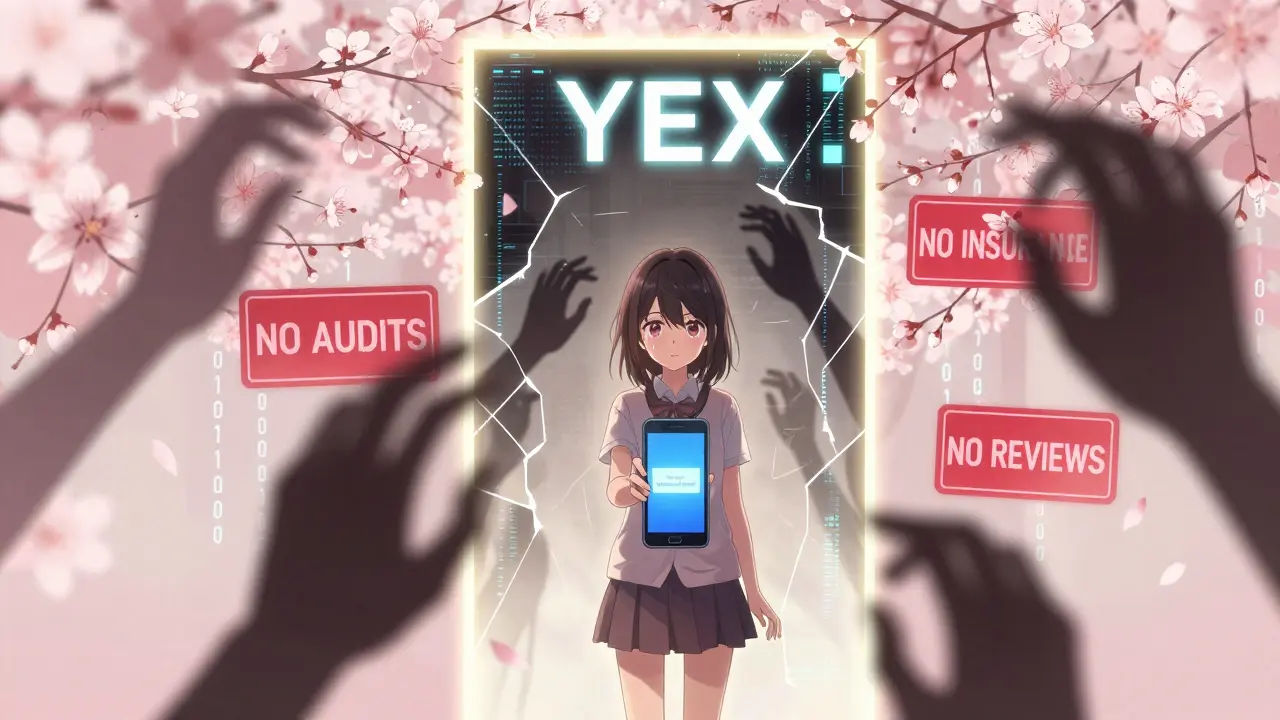
There’s no such thing as a neutral review of YEX crypto exchange - because there’s no real evidence it even exists as a legitimate platform. If you’ve seen ads for YEX promising low fees, fast withdrawals, or high-yield staking, you’re being targeted by something dangerous. Not just risky - fake.
Legitimate crypto exchanges don’t vanish from public records. They’re talked about on Reddit, reviewed on Trustpilot, covered by CoinDesk and Cointelegraph, and audited by third parties. They list their security protocols clearly: cold storage, two-factor authentication, insurance, SOC-2 compliance. YEX? Nothing. Zero. Nada. Not a single credible source mentions it. That’s not an oversight. That’s a warning sign screaming in red.
Why No One Talks About YEX
Real exchanges get attention. Binance has millions of users. Kraken publishes detailed security reports. Coinbase is regulated in 100+ countries. Even smaller, niche platforms like Bitstamp or KuCoin have years of public history, user testimonials, and security audits you can verify.
YEX has none of that. No press releases. No forum threads. No YouTube tutorials. No GitHub commits. No LinkedIn profiles for its team. No domain registration history that goes back more than a few months. When you search for YEX on Google, the only results are either paid ads or scam aggregator sites listing it as a known fraud.
According to DataVisor, fake exchanges often have no security at all - or worse, they mimic real ones with cloned websites and fake customer support. They lure you in with promises of easy profits, then vanish when you try to withdraw. And guess what? That’s exactly what happens with platforms like YEX.
What Legitimate Exchanges Do - And YEX Doesn’t
Here’s what you should expect from any crypto exchange you consider using:
- Cold storage: At least 90% of user funds are kept offline, away from hackers. Coinbase keeps 98% in cold storage. Kraken does the same.
- Two-factor authentication (2FA): Mandatory for every account. Not optional. Not a "nice to have."
- Multi-signature wallets: Transactions require multiple keys to approve. One hacker can’t steal everything.
- Regular security audits: SOC-1 and SOC-2 audits are standard. These are independent checks that prove the platform isn’t just saying it’s secure - it’s proven to be.
- Insurance: Kraken insures $250,000 per user in crypto through Lloyd’s of London. Bitstamp does the same. YEX? No insurance policy is listed. Because there isn’t one.
- DNSSEC and registry lock: These prevent domain hijacking. Only 10% of exchanges use DNSSEC. Only 2% use registry lock. If YEX had them, they’d brag about it. They don’t.
YEX doesn’t mention any of these. Not on its website. Not in its FAQ. Not in its terms of service. That’s not a mistake. That’s a red flag.
Where Are the User Reviews?
Check Trustpilot. Search Reddit. Look on CryptoSlate forums. Type "YEX scam" into Google. You’ll find dozens of reports from people who deposited funds and never got them back. Some users say they couldn’t log in after a "system update." Others say their withdrawal requests disappeared into a black hole.
Legitimate exchanges have hundreds of reviews - good and bad. Even platforms with poor customer service still have users talking. YEX has silence. That’s not trustworthiness. That’s invisibility. And in crypto, invisibility equals danger.

The Security Risks Are Real - And Costly
In 2021, crypto-related crimes hit $14 billion. Most of that came from exchange hacks and fake platforms. The average victim loses $12,000. And once the money’s gone? It’s gone forever. Cryptocurrency transactions are irreversible. There’s no chargeback. No bank to call. No customer service rep who can fix it.
If you deposit even $100 into YEX, you’re gambling with money you can’t get back. And the odds are stacked against you. Real exchanges spend millions on security. Fake ones spend $50 on a template and a domain name.
How to Spot a Fake Exchange
Here’s how to protect yourself:
- Check the domain. Is it yex-exchange.com? Or yex-crypto.net? Legit exchanges use clean, simple domains like binance.com or coinbase.com. Fake ones use weird TLDs or misspellings.
- Look for regulatory status. Does it say it’s registered with the SEC, FCA, or ASIC? If yes, verify it on the regulator’s official website. If it says "regulated in the Cayman Islands" - that’s a red flag. Many fake exchanges claim that.
- Search for audits. Type "YEX security audit" into Google. If nothing comes up, walk away.
- Check social media. Do they have active Twitter, Telegram, or Discord? Or are the accounts empty with 5 followers? Fake exchanges often buy fake followers.
- Try to withdraw. If you’ve already deposited, try to withdraw a small amount. If they delay, ask for documents, or disappear - you’ve confirmed it’s a scam.

What to Do If You’ve Already Used YEX
If you’ve sent funds to YEX:
- Stop depositing more money. Ever.
- Don’t respond to any emails claiming to be "YEX Support" asking for your private keys or 2FA codes. That’s a phishing attempt.
- Report the site to the Internet Crime Complaint Center (IC3) or your local cybercrime unit.
- Share your experience on Reddit (r/CryptoCurrencyScams) and Trustpilot. Other people might still be at risk.
- Change all passwords linked to that email. Scammers often reuse credentials across platforms.
There’s no guarantee you’ll get your money back. But you can stop others from falling for the same trap.
Stick to Trusted Platforms
There are dozens of legitimate, secure exchanges you can use right now. Here are a few you can trust:
- Coinbase: Regulated in the U.S., insured, easy for beginners.
- Kraken: Strong security, transparent audits, good for advanced traders.
- Binance: Highest liquidity, global reach (check local regulations).
- Bitstamp: One of the oldest, regulated in Europe.
All of them publish security reports. All of them have user reviews. All of them have been around for years. YEX? It doesn’t even qualify as a footnote in the crypto world.
If you’re new to crypto, don’t chase the shiny object. Don’t fall for ads promising 50% returns. The safest exchange is the one you can verify - not the one that pops up in a Facebook ad.
YEX isn’t a crypto exchange. It’s a trap. And traps don’t have reviews. They have victims.
Is YEX a real crypto exchange?
No, YEX is not a legitimate crypto exchange. There are no credible reports, security audits, user reviews, or regulatory filings for YEX. Major crypto security firms like Chainup, Shamla Tech, and DataVisor do not list it as a verified platform. Its complete absence from industry discussions strongly suggests it is either a very new, unverified platform or, more likely, a fake exchange designed to steal funds.
Why should I avoid YEX?
You should avoid YEX because it lacks basic security features that all legitimate exchanges use: cold storage, two-factor authentication, multi-signature wallets, insurance, and public security audits. Without these, your funds are at high risk of being stolen or lost forever. Fake exchanges like YEX often disappear after collecting deposits, leaving users with no recourse.
Can I trust YEX if it has low trading fees?
No. Low fees are a common lure for fake exchanges. Legitimate platforms like Binance and Coinbase offer competitive fees - but they also have proven security, insurance, and customer support. A low fee with no security is not a deal - it’s a trap. If an exchange doesn’t explain how it protects your money, it’s not worth the risk.
How do I know if a crypto exchange is safe?
Check for: 1) Public security audits (SOC-2, etc.), 2) Cold storage usage (90%+ of funds), 3) Two-factor authentication (2FA), 4) Insurance coverage for user funds, 5) Active user reviews on Trustpilot and Reddit, and 6) Regulatory registration (e.g., FinCEN, FCA). If any of these are missing, walk away.
What should I do if I already deposited money into YEX?
Stop using the platform immediately. Do not respond to any "support" emails - they’re phishing attempts. Report the exchange to IC3 or your local cybercrime authority. Share your experience on Reddit and Trustpilot to warn others. Change passwords for any accounts using the same email. Unfortunately, recovering funds from fake exchanges is nearly impossible - prevention is your only real defense.
Taylor Mills
January 24, 2026 AT 06:24Arielle Hernandez
January 26, 2026 AT 02:43Shamari Harrison
January 27, 2026 AT 16:41Nadia Silva
January 28, 2026 AT 07:41Mark Estareja
January 28, 2026 AT 14:39David Zinger
January 29, 2026 AT 13:21Heather Crane
January 31, 2026 AT 00:22Catherine Hays
January 31, 2026 AT 20:49Nathan Drake
February 2, 2026 AT 06:11Mike Stay
February 3, 2026 AT 06:28Ryan Depew
February 3, 2026 AT 18:37Tammy Goodwin
February 4, 2026 AT 06:37Andy Simms
February 5, 2026 AT 00:45Roshmi Chatterjee
February 5, 2026 AT 12:10Deepu Verma
February 6, 2026 AT 15:44